
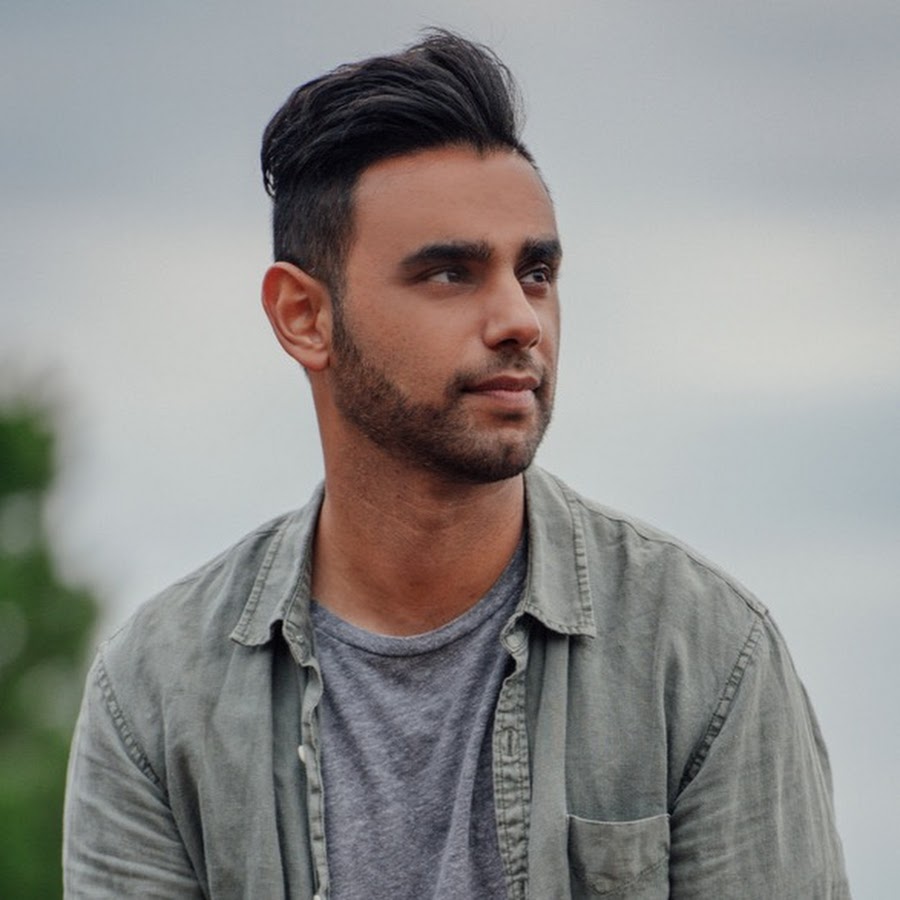
15 years ago, my first panic attack turned into a three-year nightmare—constant attacks, bizarre symptoms, intrusive thoughts, complete agoraphobia. I lost everything trying to fix it.
Traditional therapy kept me stuck. Recovery only happened when I understood what anxiety actually was at a nervous system level—what was happening and why—and learned to respond in ways that retrained my body to stop treating normal life as a threat.
I've been fully recovered for over a decade. No more symptoms. And my life has been extraordinary.
Since then, I've helped thousands of people worldwide do the same through Bye Bye Panic—not manage their anxiety, but actually heal it. The path isn't what most therapists teach, but it works when you understand what your nervous system actually needs.
#anxietyrecovery #mentalhealth #byebyepanic
Shaan Kassam
You get to be the adult in the room:
A few days ago, a member in our program made a post that I had to steal. She talks about how we can view our anxiety, chronic symptoms, and panic the way we view a child.
Picture a child who wakes up from a nightmare at 2 a.m. They're crying, their heart is pounding, they're convinced there's something in the closet.
What does a good parent do?
They don't scream back. They don't say, "Stop being ridiculous, there's nothing there!" They also don't grab a baseball bat and start searching the house, because that just tells the child the danger is real.
They sit on the edge of the bed. They lower their voice. They say, "I know it feels scary. I'm right here. You're safe."
And they stay until the child settles.
That's exactly what your nervous system needs from you.
Training your nervous system is like treating a child. You do it with patience. Not force. If you start reacting, lashing out, or panicking as well, how do you think the child is going to act.
Here is something that may be confronting: a good parent is patient.
A parent doesn't do this just once. Children don't learn they're safe from one conversation.
You can tell the child there is nothing to be afraid of, or you can show the child. Repeatedly.
That's what teaching your nervous system looks like. Not one big breakthrough. A steady pattern of calm responses until your body finally believes what you've been telling it.
Remember, you're not the child in this story. You're the parent.
You get to be the adult in the room.
1 day ago | [YT] | 339
View 15 replies
Shaan Kassam
What if the thing you do every time symptoms appear is teaching your nervous system to keep sounding the alarm?
Btw, I have a bunch of great resources on the healing journey on Instagram. It’s also the easiest way for me to connect with you.
Send me a follow:
www.instagram.com/shaan_kassam/
4 days ago | [YT] | 601
View 6 replies
Shaan Kassam
The truth about why I do this:
I have a confession to make.
You might think I created Bye Bye Panic and all this recovery content because I wanted to serve people.
And that's true.
But I also created it for selfish reasons. Personal reasons.
After I got out of the anxiety cycle and started living my life again, one question kept following me around: could I help people with this one specific problem?
I had no interest in becoming a doctor or a therapist. Quite frankly, I didn't believe those were the paths where I could actually help.
So I decided to take a standard corporate job instead.
The job was just okay. But I was finally making money and finally paying back the debt I'd racked up from all the medical bills during my anxiety years.
And in the process, I made one of the best decisions of my life.
I got a dog.
Not just any dog. She was the most special dog in the world. We bonded on day #1.
I'd wanted a dog my whole childhood, but my mom and sister were terrified of them. And by the time I was old enough to get one myself, I had fallen into the anxiety cycle. I could barely take care of myself, let alone a dog.
So when I finally brought her home, it meant something. I named her Laila. And she was the love of my life.
So what does Laila have to do with the work I’m doing?
Before the YouTube channel, before Bye Bye Panic, I was traveling constantly for work. And I hated it, because every trip took me away from her. I missed her. I knew she missed me.
So I kept asking myself: what can I do that lets me spend my time with her?
She was a dog. I knew a dog's life isn't long.
That's when I revisited the idea of helping people online. I told myself if I could help people on the recovery journey AND be home with Laila, that was a win.
So I took the leap. Quit the corporate job. Started helping people full time.
Here's the honest truth: if I hadn't had Laila, I don't know if I would've had the courage. I’m not sure if I would’ve had the motivation to do this work. I knew the odds of failing were high. But she made the risk worth taking.
She is the reason Bye Bye Panic exists. All of it.
Last year, Laila passed away. Today would’ve been her Birthday.
Even after everything I went through in my journey, the day she passed was the saddest day of my life.
I tend to feel extra grief during this time of year.
She gave me the biggest gift of all: the ability to serve you.
Three days after she passed, the channel hit 100K subscribers. It felt like a goodbye present from her. I've never cared much about subscriber counts just the chance to help people and spend time with her. But that 100K meant something different, because it felt like hers.
Everything happens for a reason. Even when we don't understand it at the time.
Since Laila's passing, I've gotten married, bought a house, moved to a new city. A whole new chapter — one I'm not sure could have started while she was still here. It's almost like she had to go for it to begin.
I miss her extra today. I want to cuddle her extra. But I can't.And if there's one thing I want you to take from Laila's story, it's this:
I didn't take the leap because my fear was gone. I took it because I had a reason that mattered more than the fear.
That's the part most people get backwards in recovery. They wait to feel ready. They wait for the anxiety to disappear, for the symptoms to quiet down, for certainty to show up first.
It never works in that order.
The courage comes from the reason, the life waiting on the other side. The person you want to be present for. The mornings you want back. The version of you that your nervous system has been protecting you from becoming.
Laila was my reason. And she didn't make the leap less scary. She made it worth taking anyway.
So my question for you today is simple: what's yours?
Find that, and your nervous system will follow. Not because you forced it — but because you finally gave it somewhere to go.
5 days ago | [YT] | 306
View 24 replies
Shaan Kassam
From panic attacks to buying a business:
I have a client who's been in our coaching program for a year and a half.
When he first joined, he couldn't leave his house due to his panic attacks. This was a MASSIVE problem for him because his work required him to drive 12-14 hours a day.
Not only was he dealing with chronic symptoms and panic attacks, but he also couldn't afford NOT to go to work.
He joined the Bye Bye Panic Recovery Program, and for the first 6-8 months, he worked on desensitizing his nervous system. He went back to work and started living life fairly quickly (even with his symptoms present).
Once he stabilized, we dove deeper into the habits, behaviors, and grinding energy that got him into the cycle in the first place. We also worked with him in identifying "what kind of life would you want to live?"
Most people mess this up because they dive into the habits, behaviors, and lifestyle changes first, but that only comes after stabilizing the nervous system.
He learned a lot about himself through the journey: not just about his symptoms, but how he carried so much as a family head, the pressure he puts on himself, and the way he spoke to himself that threw him in the first place.
So, why am I telling you this story?
Well, last week, he put in his two weeks' notice at work. And he just acquired his first business. Something that had always been his dream.
Take a moment and recognize how HUGE that is. He couldn't leave his house 18 months earlier. Now, he's taking a massive leap and taking steps to becoming a business owner. Something people without a sensitized nervous system would struggle with.
But here's what I really want you to take from his story:
Getting back to life was a huge milestone. It gave him his footing back. But it wasn't the end of the journey.
Once he could respond to his symptoms, he could start asking bigger questions.
You might be focused on getting through today. I get that. That's where we start. But I also want you to know there can be more waiting for you than the life you had before this.
You don't need to wait until every symptom is gone to start moving towards your life. You can learn how to respond to what you're experiencing, build capacity, and take steps towards the things that matter to you.
If you're ready to start that journey and want to learn more, click here and lets have a chat:
assessment.byebyepanic.com/program.html?src=yt-com…
1 week ago | [YT] | 24
View 14 replies
Shaan Kassam
Read this before you convince yourself it’s not working.
Btw, I have a bunch of great resources on the healing journey on Instagram. It’s also the easiest way for me to connect with you.
Send me a follow:
www.instagram.com/shaan_kassam/
1 week ago | [YT] | 90
View 20 replies
Shaan Kassam
Don't make recovery your next obsession:
If you're struggling with a sensitized nervous system, I want to just say...
It sucks.
Like, it really sucks.
Whether it's the chronic bodily symptoms, intrusive thoughts, or panic attacks; you wouldn't wish it on your worst enemy. I know.
And I'm not sending this post to tell you that you can heal. I've said that a million times.
I'm sending this post to say something a bit different.
Because healing isn't just about making your symptoms go away.
I know this is what you want. And I'm not saying it's not possible.
I'm saying healing CAN'T be JUST about making your symptoms go away.
You need to move towards something in life. Maybe that's a better career, a deeper relationship with your partner, or maybe just having fun and traveling the world.
You have to move towards something. Not just move away from discomfort.
The problem is that sensitized people become so obsessed with the concept of recovery that they don't ask themselves what will happen when that day comes.
Recently we had a member in the Bye Bye Panic program who joined our client success team. She went from being a client struggling with debilitating symptoms, to healing, quitting her job, and joining our team.
What a full-circle moment huh?
When she first joined as a member, we asked her, "what are your goals," she said "I want to go through this journey, learn from it, and work with the BBP team to help others through this as well." She was very clear.
She didn't say "I want to heal and make this all go away." That's was a given. She had dreams beyond that.
And guess what? A year and a half later, we just welcomed her as a full-time client success manager.
My point is this...
If your only focus is to respond and heal so that you make your symptoms go away, you'll only make recovery an obsession. Your obsession will shift from your symptoms to recovery. It's still an obsession.
And when recovery takes up all that space, it's easy to lose sight of the life you're trying to get back to.
So if you're someone who has dreams and goals you've put on hold because of how you feel, I want you to think about them again.
You don't need to wait until every symptom is gone to start moving towards your life. You can learn how to respond to what you're experiencing, build capacity, and take steps towards the things that matter to you.
If you're ready to start that journey and want to learn more, click here and let's have a chat:
assessment.byebyepanic.com/program.html?src=yt-com…
Shaan
1 week ago (edited) | [YT] | 9
View 24 replies
Shaan Kassam
The understanding plateau:
People think that once they understand why they have symptoms, they'll heal.
They learn that anxiety is a sensitized nervous system. They learn the symptoms aren't dangerous. They learn the loop — fear of the sensation creates more sensation, which creates more fear.
It clicks. It makes sense. They feel relieved.
But then the next wave hits, and the same micro-uncertainty shows up:
Is this one going to pass? What if this is the one that doesn't? What if I'm doing it wrong?
This is why people watch hours of recovery content, read every book, follow every channel — and stay exactly where they were six months ago.
Because here's what's missing:
Knowing why your symptoms happen is not the same as teaching your nervous system it's safe.
Your mind can learn the mechanics of your symptoms in an afternoon. Your body learns over months. Two different systems, running on two different clocks. Recovery requires both — but content only speaks to one.
Understanding gets your brain on board. But your nervous system doesn't learn through information. It learns through repeated experience — the sensation arriving, and nothing bad happening. Over and over, until it finally updates.
Understanding is cognitive. Allowing is somatic.
That's why you can fully understand what's happening and still flinch every time symptoms show up. The flinch isn't a thought. It's a reflex — conditioned over months or years of treating the sensation as dangerous.
You can't think a reflex away. You have to outlast it.
So people stay stuck even when they "get it." They keep going back to the well of information, hoping the next video finally clicks hard enough to stop the symptoms.
But information isn't the missing piece anymore. You already understand it.
The reason you're still struggling isn't that you haven't learned enough. It's that your nervous system hasn't had enough lived experience of the sensation arriving and being safe. That experience can't be downloaded. It has to be accumulated — wave after wave, met without resistance, until your nervous system stops sounding the alarm.
This is the part no video can do for you. A video can teach you the concept. It can't be there at 2am when symptoms wake you up. It can't catch you when you start checking. It can't reflect back what you're actually doing when the old patterns are running the show.
Recovery isn't a content problem. It's a practice problem.
And real practice — the kind that actually desensitizes your nervous system — requires three things content can't give you:
A structure that keeps you moving forward when you'd otherwise spiral. Someone who can see what you're actually doing, not what you think you're doing. The steadiness of being walked through it by someone who's already been through it.
That's what the Bye Bye Panic Mentorship was built for.
It's not more information — you already have that. It's the lived practice your nervous system needs to recalibrate, with the structure and guidance to make sure it actually happens.
If you're tired of understanding it but not living it, this is your next step.
Have a look and see if it's right for you:
assessment.byebyepanic.com/program.html?src=yt-com…
You'll see exactly what's included, who it's for, and how to talk with our team.
— Shaan
1 week ago | [YT] | 3
View 3 replies
Shaan Kassam
Survival mode doesn’t always look like panic. Sometimes it looks like your personality.
I have a bunch of great resources on the healing journey on Instagram. It’s also the easiest way for me to connect with you.
Send me a follow:
www.instagram.com/shaan_kassam/
1 week ago | [YT] | 374
View 18 replies
Shaan Kassam
Recovery is easy to miss when you’re only looking for symptoms to disappear.
I have a bunch of great resources on the healing journey on Instagram. It’s also the easiest way for me to connect with you.
Send me a follow:
www.instagram.com/shaan_kassam/
1 week ago | [YT] | 605
View 34 replies
Shaan Kassam
There's one thing that will heal your nervous system.
And almost nobody wants to hear it.
Doing the thing your nervous system is screaming at you not to do — without trying to feel better while you do it.
Thats it. That's the whole thing.
I know how that sounds. I've worked with thousands of members who came to me only after they'd tried everything else. Yoga. Meditation. Years of therapy. Medication. Inpatient treatment. For most of them, this work was a last resort.
And here's what they eventually saw:
They weren't actually trying to recover.
They were trying to feel better.
Those are two completely different projects.
Everything they'd tried was built on the same hidden premise — that the sensations are the problem. And once that's the premise, every solution becomes a variation of "make the sensations stop." Every variation, no matter how sophisticated, reinforces the one belief keeping the nervous system sensitized:
These sensations are dangerous enough to require intervention.
That's the trap. Not that the tools don't work. That the tools, by existing, confirm the threat.
So the work isn't another tool. The work is doing the thing — the drive, the dinner, the meeting, the grocery store — and letting it be as bad as it's going to be.
You're being asked to stop protecting yourself from the only thing that's ever felt like real danger to you. With no proof in advance that you'll be okay. That's not a small ask.
So here are a few things that make it possible:
Drop the goal of doing it well. Most members fail at first because they're trying to do it calmly. White-knuckling through the store, hoping to feel okay by aisle three. When they don't, they call it a failed attempt. The instruction isn't "go do it and feel fine." It's "go do it and let it be as bad as it's going to be." Success is showing up. The moment you grade yourself on how you felt, you've turned the practice back into relief-seeking.
Stop waiting for a good day. The nervous system doesn't learn safety on the easy days. It learns it on the days the symptoms are loud and you went anyway. Waiting for the right window is avoidance with better branding.
Stop checking mid-action. You go to the dinner, but the whole time you're scanning. Is it getting worse? Is my heart rate up? Am I okay? That's not exposure. That's surveillance with a fork in your hand. The work is to put your attention on the conversation, the food, the person across from you — and let the symptoms run in the background, unattended. They'll scream for attention. You don't owe them a response.
One last thing you should know:
It usually feels worse before it feels better.
The nervous system gets louder when you stop appeasing it. Symptoms often spike in the first weeks because the system is essentially saying, "wait — you used to respond when I did this. Why aren't you responding?"
That's not a sign it's not working.
That's the sign it is.
Most people quit right at the doorway of the result they wanted.
If you've read this far and something in it landed — something you've felt for a long time but couldn't quite name — that's worth paying attention to.
The Bye Bye Panic Mentorship is built around exactly this work.
Not tools to feel better. A six-month container to teach your nervous system, with a team that has done this themselves and walks alongside you while you do it.
Doctors, therapists, and professors have come through this program. So have people who hadn't left their house in years.
If you want to see what's inside and whether it's a fit:
assessment.byebyepanic.com/program.html?src=yt-com…
You'll see exactly what's included, who it's for, and the next step to talk with our team.
2 weeks ago | [YT] | 365
View 10 replies
Load more