
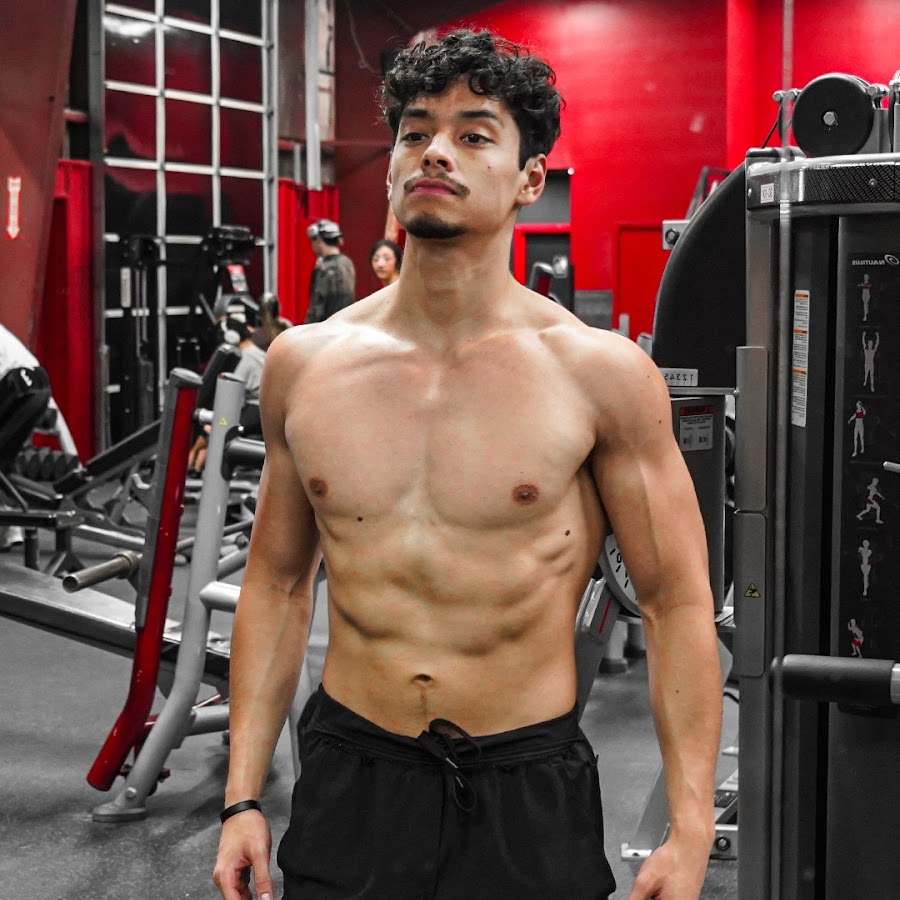
When it comes to "bad posture" there are many considerations that could be causing it like your breathing for example.
But many people don't realize that anterior pelvic tilt could be a movement compensation, let me explain.
When you don't have the ROM required to complete a particular movement, your body is super smart, so it borrows ROM from somewhere else.
A great example is an overhead press. Many people lack 'true' shoulder flexion to get their arms overhead, but, your body needs to find a way to get your arms overhead. So it compensates by flaring those ribs and arching the low back to get the arms up. (Try this out rn!)
You didn't actually get more shoulder flexion here tho, you just moved your entire upper body backwards to get your arm up.
That is an example of how altering your posture can still lead your body to accomplishing its goal (getting your arm overhead) even with a lack of mobility.
Now how does this tie with anterior pelvic tilt?
We need hip IR to walk/run/sprint effectively as it is needed to push off the ground. But if we don't have the mobility required to do that our body will just anteriorly tilt the pelvis as this still gets the job done of getting your leg forward.
The problem is that eventually your body defaults to this which leads to worse movement and sometimes leads to symptoms like chronic low back pain.
This means a solution to APT could be to just restore Hip IR so you body no longer needs to compensate by dumping your pelvis forward.
PS: Finally fix your posture by joining my free community HERE: skool.com/rios
There are a lot of bodybuilders and influencers today that claim that bodybuilding is functional and even some say that it is great for sports so let's talk about it!
First, the word "functional" and what classifies as "functional training" means something completely different based on who you ask.
Bodybuilders will claim that anything that improves function AT ALL is considered functional training and that muscle in and of itself is function. If that's the definition of functional training, everything is functional.
So what do I classify as functional training? I classify functional training as a training style that improves function (movement because that's what humans were designed to do) at an OPTIMAL level. Does bodybuilding do that? No!
Bodybuilding promotes lots of extension and compression of the body which worsens your ability to rotate. When your doing a heavy squat, heavy bench, heavy leg press, rotation is NOT a good thing as it worsen your ability to generate force. You want to be super stable and stiff so you can lift as much weight as possible. Imagine a boxer or a golfer who needs lots of rotation exclusively doing bodybuilding for years. Chasing extreme levels of muscle/strength for years may interfere with your ability to rotate effectively which is needed for nearly all movements outside the gym.
Now I'm not saying the bodybuilding is not beneficial. Building muscle and getting stronger is great. But doing it exclusively is not the best way to train for function and sport. Ideally, you want a mix of "bodybuilding" exercises and also more functional exercises that improve rotation and also alternating functions of the body.
PS: Want to build muscle while also moving great and being athletic? Join my free community HERE: skool.com/rios
Is Bodybuilding "Functional"?
There are a lot of bodybuilders and influencers today that claim that bodybuilding is functional and even some say that it is great for sports so let's talk about it!
First, the word "functional" and what classifies as "functional training" means something completely different based on who you ask.
Bodybuilders will claim that anything that improves function AT ALL is considered functional training and that muscle in and of itself is function. If that's the definition of functional training, everything is functional.
So what do I classify as functional training? I classify functional training as a training style that improves function (movement because that's what humans were designed to do) at an OPTIMAL level. Does bodybuilding do that? No!
Bodybuilding promotes lots of extension and compression of the body which worsens your ability to rotate. When your doing a heavy squat, heavy bench, heavy leg press, rotation is NOT a good thing as it worsen your ability to generate force. You want to be super stable and stiff so you can lift as much weight as possible. Imagine a boxer or a golfer who needs lots of rotation exclusively doing bodybuilding for years. Chasing extreme levels of muscle/strength for years may interfere with your ability to rotate effectively which is needed for nearly all movements outside the gym.
Now I'm not saying the bodybuilding is not beneficial. Building muscle and getting stronger is great. But doing it exclusively is not the best way to train for function and sport. Ideally, you want a mix of "bodybuilding" exercises and also more functional exercises that improve rotation and also alternating functions of the body.
PS: Want to build muscle while also moving great and being athletic? Join my free community HERE: skool.com/rios
Hey guys, today I just want to go over something I am super grateful about.
If you have watched my channel for a while you know that I had to take a good bit of time off of normal training due to migraines, right trap tension, and r temporalis tension (worst one).
This at best was incredibly uncomfortable and annoying and at worse impacted my quality of life.
But looking back at everything that I went to, I am so grateful.
Without going through this I wouldn't have learned as much as I have about the human body and training the RIGHT way.
By right way I mean training with respect to your bodies natural asymmetry, movement, breathing, and posture. This way you not only build a body that looks great but is healthy and performs at a high level as well.
I also think this is a great opportunity to let anyone out there who's going through tough times know that everything happens for a reason. I wouldn't have developed this new passion and new knowledge without going through what I did and now I have the privilege of helping others who deal with a similar thing as me.
If something "bad" is going on in your life, understand that the only reason why you think it's "bad" is because of your limited perception of the situation and god is putting you through this situation to shape you into the person you need to be so be grateful for the "bad" times too even though I don't believe in bad things happening to me. Everything happens for a reason.
PS: If you want to build an aesthetic physique, fix your posture, and reach elite level athleticism, join my FREE community HERE: skool.com/rios
Why Desk Workers Never Fix Their Forward Head Posture
So many desk workers struggle with forward head posture due to the static position they are often in.
This often leads to them selecting exercises like chin tucks to fix forward head posture.
But this is just addressing the symptoms not why you have forward head posture in the first place.
Forward head posture is simply a compensation to help you breathe better, as this posture opens up the upper respiratory dimensions.
So in order to fix forward head posture you want to fix your breathing mechanics so you don't have to resort to this posture to breathe.
A great place to start is by incorporating drills to facilitate rib cage expansion like Prone press ups (pic 2) and seated posterior expansion (pic 3).
When you can breathe properly, your body doesn't need to move the head forward to breathe.
Want to learn more about fixing posture? Join my free community HERE: skool.com/rios
Most people lift in extension (red skeleton). Ribs flared, low back arched, pelvis tipped forward. It feels stable and strong because it's the position your body already defaults to. But loading on top of it just teaches your body to compensate if it hasnβt already or reinforces the compensation.
The fix is lifting from the stack (green skeleton) ribcage stacked directly over your pelvis before you add any load.
Here's why itβs the best way to lift: It optimizes length-tension relationships. Muscles can produce the most force when they are in their intended length. Extending your body messes up length tension relationships in your upper and lower body.
It restores breathing and movement. Extension keeps you locked in a chronic inhale, limiting rotation and force transfer. Stacked, you can actually exhale fully, expand the rib cage, and move efficiently.
It stops reinforcing bad posture. Lift in extension and you're reinforcing the same compensation causing your pain.
Lift stacked and training becomes corrective.
It builds real core stability. Extension leads to you relying on joint compression for stability. A stack requires your neuromuscular system to work hard.
It also forces you to train relative motion, not absolute range of motion.
You only get range from the joints/muscles you are targeting, not from moving entire segments of your body to βfakeβ ROM like your spine. This keeps tension on the muscle you're targeting, prevents momentum and cheating, and stops the stimulus from leaking to other muscles. Position plus relative motion is the best way to lift as it resolves your dysfunction instead of reinforcing it.
Want to learn how to lift with the stack? Join my free skool community and watch the lecture where I teach you this. Join HERE: skool.com/rios
You Fix Your Posture ... by not trying to fix your posture
Most fitness advice treats posture like a 'mannequin' problem. If your shoulder is rolled forward, "pull it back." If your head is forward, "tuck your chin." If your low back is arched, "brace your core."
This is symptom chasing. You're not addressing why your posture is "bad" (for lack of a better term) in the first place.
Posture is simply a reflection of your breathing and movement compensations.
So when you see a flared rib cage, a side-bent neck, a shoulder sitting lower than the other you're not looking at "bad posture." You're looking at the physical representation of a breathing and movement compensation pattern that's been running in the background for years.
When you actually address where your movement is lacking and restore proper airflow to the rib cage the posture just fixes itself!
The ribs come down on their own. The shoulder finds its level on its own. The pelvis returns to neutral on it's own, etc.
This didn't happen because you forced any of those things to happen, but because the compensation that was holding them in place is no longer necessary.
And this is usually where the pain goes too!
This is exactly the approach I use inside Athletic Posture Lab with combat sport athletes and general fitness clients alike: find the compensation, resolve it, let the posture and the performance follow.
PS: Join the Athlete Posture Lab Skool community to learn the framework , connect with people applying it, and access resources you can apply to your training today! Join here: skool.com/rios
"Tight" and "Weak" Muscles Don't Exist (technically)
When I was in PT school, I was taught that tight muscles pull you into bad posture and weak muscles don't hold you in good posture.
And technically ... that's true.
When you have bad posture, there are muscles that are overactive, muscles that are tight, and muscles that aren't working like they should, muscle that are weak.
But here's what they didn't teach me: those are symptoms of bad posture. Not the cause.
Everyone says anterior pelvic tilt is caused by tight hip flexors, a tight low back, and weak glutes and abs.
But it's actually the opposite.
The anterior pelvic tilt itself is what doesn't allow your hip extensors and abs to work properly because they don't have good leverage in that position. And it's what causes your low back and hip flexors to be overactive and tight, because they're compensating for that position.
The muscles aren't creating the problem. The position is creating the muscle behavior.
Tomorrow I'm dropping a free training inside my Skool community where I go deeper on this: what's actually causing bad posture and how to fix it for real.
Hey guys, dropping a free training in my skool community in an hour where I go over why your pain keeps coming back no matter how many stretches and "corrective exercises" you do!
Most people assume bad posture is a flexibility problem.
It's not.
It's a breathing and movement pattern problem and it's silently wrecking your performance whether you feel it or not.
If your body is stuck in the wrong compensation pattern, you're training harder than you need to just to get less out of every session. Your joints can't move through the ranges they need. Your muscles can't fire the way they're designed to. And no amount of stretching is going to fix it because stretching doesn't change the pattern.
I just dropped a free lecture in my community breaking down the two global compensation patterns I see in almost every active guy I work with.
You'll learn what they look like, why your body ends up there, and why the standard corrective approach makes most people worse not better.
If you lift, train, or just want to move and feel like an athlete for the long haul, this one will change how you see your own body.
Hey guys, I'm dropping a FREE training tomorrow where I go over why your posture isn't fixing and dive deep into swayback posture and anterior pelvic tilt.
This is happening live tomorrow in my FREE community, join HERE: skool.com/rios
PS: If you can't make it the recording will be in the community after :)
Martin Rios
Bad Mobility = Anterior Pelvic Tilt
When it comes to "bad posture" there are many considerations that could be causing it like your breathing for example.
But many people don't realize that anterior pelvic tilt could be a movement compensation, let me explain.
When you don't have the ROM required to complete a particular movement, your body is super smart, so it borrows ROM from somewhere else.
A great example is an overhead press. Many people lack 'true' shoulder flexion to get their arms overhead, but, your body needs to find a way to get your arms overhead. So it compensates by flaring those ribs and arching the low back to get the arms up. (Try this out rn!)
You didn't actually get more shoulder flexion here tho, you just moved your entire upper body backwards to get your arm up.
That is an example of how altering your posture can still lead your body to accomplishing its goal (getting your arm overhead) even with a lack of mobility.
Now how does this tie with anterior pelvic tilt?
We need hip IR to walk/run/sprint effectively as it is needed to push off the ground. But if we don't have the mobility required to do that our body will just anteriorly tilt the pelvis as this still gets the job done of getting your leg forward.
The problem is that eventually your body defaults to this which leads to worse movement and sometimes leads to symptoms like chronic low back pain.
This means a solution to APT could be to just restore Hip IR so you body no longer needs to compensate by dumping your pelvis forward.
PS: Finally fix your posture by joining my free community HERE: skool.com/rios
6 days ago | [YT] | 86
View 2 replies
Martin Rios
Is Bodybuilding Functional?
There are a lot of bodybuilders and influencers today that claim that bodybuilding is functional and even some say that it is great for sports so let's talk about it!
First, the word "functional" and what classifies as "functional training" means something completely different based on who you ask.
Bodybuilders will claim that anything that improves function AT ALL is considered functional training and that muscle in and of itself is function. If that's the definition of functional training, everything is functional.
So what do I classify as functional training? I classify functional training as a training style that improves function (movement because that's what humans were designed to do) at an OPTIMAL level. Does bodybuilding do that? No!
Bodybuilding promotes lots of extension and compression of the body which worsens your ability to rotate. When your doing a heavy squat, heavy bench, heavy leg press, rotation is NOT a good thing as it worsen your ability to generate force. You want to be super stable and stiff so you can lift as much weight as possible. Imagine a boxer or a golfer who needs lots of rotation exclusively doing bodybuilding for years. Chasing extreme levels of muscle/strength for years may interfere with your ability to rotate effectively which is needed for nearly all movements outside the gym.
Now I'm not saying the bodybuilding is not beneficial. Building muscle and getting stronger is great. But doing it exclusively is not the best way to train for function and sport. Ideally, you want a mix of "bodybuilding" exercises and also more functional exercises that improve rotation and also alternating functions of the body.
PS: Want to build muscle while also moving great and being athletic? Join my free community HERE: skool.com/rios
Is Bodybuilding "Functional"?
There are a lot of bodybuilders and influencers today that claim that bodybuilding is functional and even some say that it is great for sports so let's talk about it!
First, the word "functional" and what classifies as "functional training" means something completely different based on who you ask.
Bodybuilders will claim that anything that improves function AT ALL is considered functional training and that muscle in and of itself is function. If that's the definition of functional training, everything is functional.
So what do I classify as functional training? I classify functional training as a training style that improves function (movement because that's what humans were designed to do) at an OPTIMAL level. Does bodybuilding do that? No!
Bodybuilding promotes lots of extension and compression of the body which worsens your ability to rotate. When your doing a heavy squat, heavy bench, heavy leg press, rotation is NOT a good thing as it worsen your ability to generate force. You want to be super stable and stiff so you can lift as much weight as possible. Imagine a boxer or a golfer who needs lots of rotation exclusively doing bodybuilding for years. Chasing extreme levels of muscle/strength for years may interfere with your ability to rotate effectively which is needed for nearly all movements outside the gym.
Now I'm not saying the bodybuilding is not beneficial. Building muscle and getting stronger is great. But doing it exclusively is not the best way to train for function and sport. Ideally, you want a mix of "bodybuilding" exercises and also more functional exercises that improve rotation and also alternating functions of the body.
PS: Want to build muscle while also moving great and being athletic? Join my free community HERE: skool.com/rios
1 week ago | [YT] | 74
View 11 replies
Martin Rios
Gratitude π
Hey guys, today I just want to go over something I am super grateful about.
If you have watched my channel for a while you know that I had to take a good bit of time off of normal training due to migraines, right trap tension, and r temporalis tension (worst one).
This at best was incredibly uncomfortable and annoying and at worse impacted my quality of life.
But looking back at everything that I went to, I am so grateful.
Without going through this I wouldn't have learned as much as I have about the human body and training the RIGHT way.
By right way I mean training with respect to your bodies natural asymmetry, movement, breathing, and posture. This way you not only build a body that looks great but is healthy and performs at a high level as well.
I also think this is a great opportunity to let anyone out there who's going through tough times know that everything happens for a reason. I wouldn't have developed this new passion and new knowledge without going through what I did and now I have the privilege of helping others who deal with a similar thing as me.
If something "bad" is going on in your life, understand that the only reason why you think it's "bad" is because of your limited perception of the situation and god is putting you through this situation to shape you into the person you need to be so be grateful for the "bad" times too even though I don't believe in bad things happening to me. Everything happens for a reason.
PS: If you want to build an aesthetic physique, fix your posture, and reach elite level athleticism, join my FREE community HERE: skool.com/rios
1 week ago (edited) | [YT] | 112
View 9 replies
Martin Rios
Why Desk Workers Never Fix Their Forward Head Posture
So many desk workers struggle with forward head posture due to the static position they are often in.
This often leads to them selecting exercises like chin tucks to fix forward head posture.
But this is just addressing the symptoms not why you have forward head posture in the first place.
Forward head posture is simply a compensation to help you breathe better, as this posture opens up the upper respiratory dimensions.
So in order to fix forward head posture you want to fix your breathing mechanics so you don't have to resort to this posture to breathe.
A great place to start is by incorporating drills to facilitate rib cage expansion like Prone press ups (pic 2) and seated posterior expansion (pic 3).
When you can breathe properly, your body doesn't need to move the head forward to breathe.
Want to learn more about fixing posture? Join my free community HERE: skool.com/rios
2 weeks ago (edited) | [YT] | 108
View 7 replies
Martin Rios
Why You MUST Lift With The Stack
Most people lift in extension (red skeleton). Ribs flared, low back arched, pelvis tipped forward. It feels stable and strong because it's the position your body already defaults to. But loading on top of it just teaches your body to compensate if it hasnβt already or reinforces the compensation.
The fix is lifting from the stack (green skeleton) ribcage stacked directly over your pelvis before you add any load.
Here's why itβs the best way to lift:
It optimizes length-tension relationships. Muscles can produce the most force when they are in their intended length. Extending your body messes up length tension relationships in your upper and lower body.
It restores breathing and movement. Extension keeps you locked in a chronic inhale, limiting rotation and force transfer. Stacked, you can actually exhale fully, expand the rib cage, and move efficiently.
It stops reinforcing bad posture. Lift in extension and you're reinforcing the same compensation causing your pain.
Lift stacked and training becomes corrective.
It builds real core stability. Extension leads to you relying on joint compression for stability. A stack requires your neuromuscular system to work hard.
It also forces you to train relative motion, not absolute range of motion.
You only get range from the joints/muscles you are targeting, not from moving entire segments of your body to βfakeβ ROM like your spine. This keeps tension on the muscle you're targeting, prevents momentum and cheating, and stops the stimulus from leaking to other muscles.
Position plus relative motion is the best way to lift as it resolves your dysfunction instead of reinforcing it.
Want to learn how to lift with the stack? Join my free skool community and watch the lecture where I teach you this. Join HERE: skool.com/rios
2 weeks ago | [YT] | 27
View 0 replies
Martin Rios
You Fix Your Posture ... by not trying to fix your posture
Most fitness advice treats posture like a 'mannequin' problem. If your shoulder is rolled forward, "pull it back." If your head is forward, "tuck your chin." If your low back is arched, "brace your core."
This is symptom chasing. You're not addressing why your posture is "bad" (for lack of a better term) in the first place.
Posture is simply a reflection of your breathing and movement compensations.
So when you see a flared rib cage, a side-bent neck, a shoulder sitting lower than the other you're not looking at "bad posture." You're looking at the physical representation of a breathing and movement compensation pattern that's been running in the background for years.
When you actually address where your movement is lacking and restore proper airflow to the rib cage the posture just fixes itself!
The ribs come down on their own. The shoulder finds its level on its own. The pelvis returns to neutral on it's own, etc.
This didn't happen because you forced any of those things to happen, but because the compensation that was holding them in place is no longer necessary.
And this is usually where the pain goes too!
This is exactly the approach I use inside Athletic Posture Lab with combat sport athletes and general fitness clients alike: find the compensation, resolve it, let the posture and the performance follow.
PS: Join the Athlete Posture Lab Skool community to learn the framework , connect with people applying it, and access resources you can apply to your training today! Join here: skool.com/rios
3 weeks ago | [YT] | 14
View 2 replies
Martin Rios
"Tight" and "Weak" Muscles Don't Exist (technically)
When I was in PT school, I was taught that tight muscles pull you into bad posture and weak muscles don't hold you in good posture.
And technically ... that's true.
When you have bad posture, there are muscles that are overactive, muscles that are tight, and muscles that aren't working like they should, muscle that are weak.
But here's what they didn't teach me: those are symptoms of bad posture. Not the cause.
Everyone says anterior pelvic tilt is caused by tight hip flexors, a tight low back, and weak glutes and abs.
But it's actually the opposite.
The anterior pelvic tilt itself is what doesn't allow your hip extensors and abs to work properly because they don't have good leverage in that position. And it's what causes your low back and hip flexors to be overactive and tight, because they're compensating for that position.
The muscles aren't creating the problem. The position is creating the muscle behavior.
Tomorrow I'm dropping a free training inside my Skool community where I go deeper on this: what's actually causing bad posture and how to fix it for real.
Link to join π
skool.com/rios
2 months ago | [YT] | 133
View 3 replies
Martin Rios
Free Training In One Hour π¨
Hey guys, dropping a free training in my skool community in an hour where I go over why your pain keeps coming back no matter how many stretches and "corrective exercises" you do!
Be sure to join here: skool.com/rios
2 months ago | [YT] | 48
View 0 replies
Martin Rios
Your posture isn't just about how you look. π€―
Most people assume bad posture is a flexibility problem.
It's not.
It's a breathing and movement pattern problem and it's silently wrecking your performance whether you feel it or not.
If your body is stuck in the wrong compensation pattern, you're training harder than you need to just to get less out of every session. Your joints can't move through the ranges they need. Your muscles can't fire the way they're designed to. And no amount of stretching is going to fix it because stretching doesn't change the pattern.
I just dropped a free lecture in my community breaking down the two global compensation patterns I see in almost every active guy I work with.
You'll learn what they look like, why your body ends up there, and why the standard corrective approach makes most people worse not better.
If you lift, train, or just want to move and feel like an athlete for the long haul, this one will change how you see your own body.
π Watch it here: skool.com/rios
2 months ago | [YT] | 136
View 2 replies
Martin Rios
Free Training Tomorrow!!!! π¨
Hey guys, I'm dropping a FREE training tomorrow where I go over why your posture isn't fixing and dive deep into swayback posture and anterior pelvic tilt.
This is happening live tomorrow in my FREE community, join HERE: skool.com/rios
PS: If you can't make it the recording will be in the community after :)
2 months ago | [YT] | 59
View 1 reply
Load more