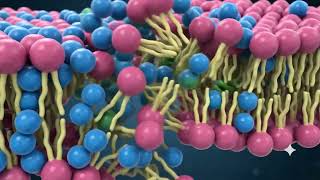
Detergent-induced membrane breakdown: the Three-Step Solubilization Model
KR4DYC-John Thomas Winskas |
4 videos |
Updated 2 months ago
The physical-chemical principles and mechanisms governing surfactant interactions with biological membranes and structural matrices are well-documented in biophysics and dermatological science. Relevant scientific literature and reference frameworks supporting these processes include:1. Cellular Membrane and Lipid Bilayer Perturbation
Mechanism of Action: Synthetic anionic surfactants (such as Sodium Laureth Sulfate or Sodium Dodecyl Sulfate) partition into lipid bilayers via hydrophobic interactions between their hydrocarbon tails and the fatty acyl chains of membrane phospholipids.
The Three-Step Solubilization Model: Biophysical studies outline that detergent-induced membrane breakdown occurs through progressive stages: (1) monomer partitioning into the bilayer, (2) structural strain, vesicle swelling, and pore formation, and (3) complete structural disruption via the shedding of mixed detergent-phospholipid micelles. Primary References:Le Maire, M., et al. (2000). "Interaction of membrane proteins and lipids with solubilizing detergents." Biochimica et Biophysica Acta (BBA) - Reviews on Biomembranes.Otzen, D. (2017). "Protein-surfactant interactions: A tale of many states." Biochimica et Biophysica Acta (BBA) - Proteins and Proteomics.
share.gemini.google/BXM3M8neCVTe