Colonial Debt Reversal: A Life-Coherent Framework for Reparatory Justice
Toward Life-Knowledge |
4 videos |
Updated 3 months ago
How should we understand reparations in the twenty-first century?
This playlist explores one of the most challenging questions in political philosophy, history and international justice through the original concept of colonial debt reversal.
Drawing on the academic white paper The Sacrificed Are Told to Thank the Altar: Colonial Debt Reversal and the Life-Coherent Meaning of Reparations, the series argues that the central issue is not inherited personal guilt, but continuing institutional responsibility. It examines how imperial accounting transformed extraction into investment, domination into development and historically injured societies into supposed debtors.
Across presentations, explainers and companion discussions, the series explores:
Colonial debt reversal
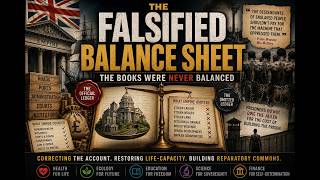
The falsified imperial balance sheet
Infrastructure as the operating cost of extraction
Personal guilt versus institutional responsibility
The asymmetry of emancipation
Moloch and Mammon as symbols of sacrificial political economy
Reparations as life-capacity restoration
Reparatory commons and genuine self-determination
Correcting the historical account
Rather than treating reparations as revenge, inherited blame or charity, this series presents them as a framework for truthful accounting, institutional responsibility and the restoration of the human, ecological, cultural and economic capacities required for flourishing societies.
Included in this playlist
Presentation 1: The Colonial Debt Inversion
Presentation 2: Reversing the Imperial Ledger
Video Explainer: Colonial Debt Reversal
Cinematic Explainer: The Falsified Balance Sheet
This playlist accompanies the academic white paper:
The Sacrificed Are Told to Thank the Altar: Colonial Debt Reversal and the Life-Coherent Meaning of Reparations
Read the full paper here:
bsahely.com/2026/07/11/the-sacrificed-are-told-to-…