
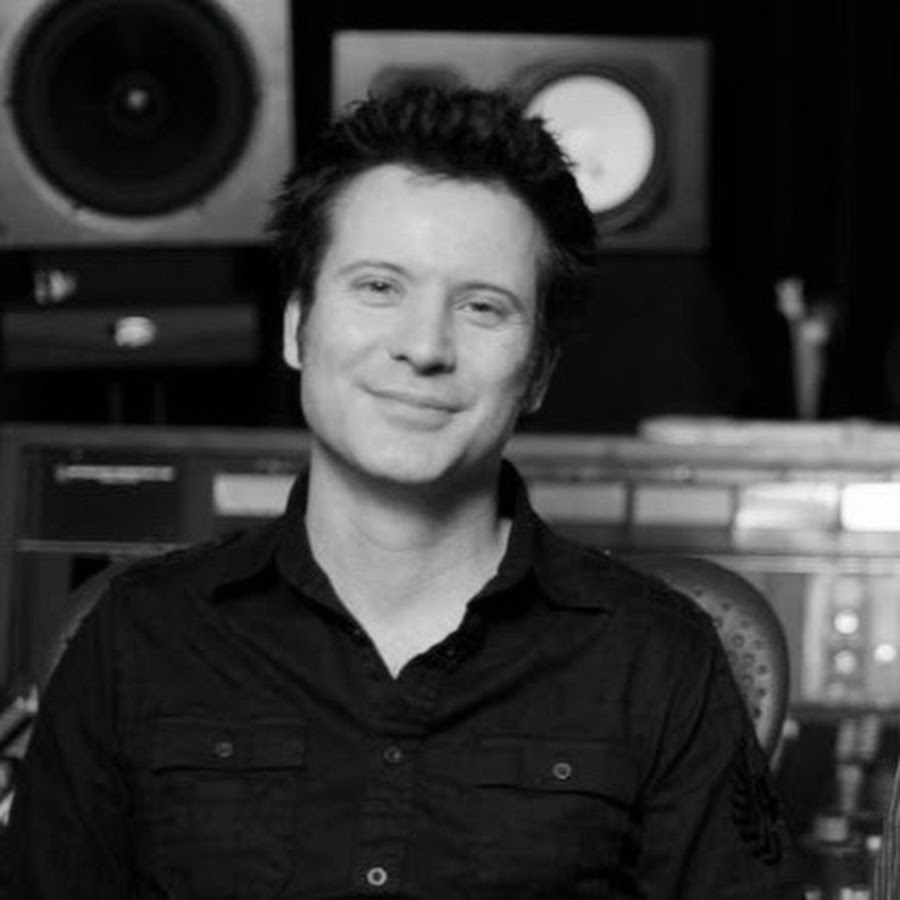
Hi, I'm Warren Huart and I am blessed to make music for a living.
I want to share with you all of my experience of making records every day.
Do you want to improve your Recording and Mixing?
Be part of an amazing community of people who help each other?
We learn how to record studio quality music in your home studio
And learn how to Produce Like A Pro.
You will learn:-
- Home Recording
- Mixing
- Recording and Mixing Vocals
- Recording Acoustic Guitar
- Recording and Mixing Drums
- Mixing with EQ
- Mixing with Compression
- Mixing with Effects such as Reverb and Delay
- Everything you'll need to know about making amazing sounding music in your home studio
Creativity is King. I am here to share with you real world experience! I make music every day and I started with just a Cassette player and an Electric Guitar I built with my Dad!
You can make marvellous music on any level of equipment.
Please subscribe and let's share this journey together.
www.producelikeapro.com
Produce Like A Pro
Oldie but Gold: Michael Romanowski’s Tips for Better Mastering and More Musical Records
Some conversations deserve another listen! A few years ago, I visited Michael Romanowski at Coast Mastering in Berkeley’s Fantasy Studios complex for a studio tour and a wonderfully wide-ranging conversation about making records. We talked about monitoring, compression, EQ, analogue equipment, plug-ins and his enthusiasm for immersive audio. Throughout it all, Michael kept bringing us back to one thing: serving the music.
Since we originally filmed this interview, Michael has gone on to become a six-time Grammy winner, with 11 nominations across his career! It is wonderful to see his work receive that recognition, and it makes revisiting his enthusiasm for immersive audio particularly rewarding. You can hear that passion throughout our conversation, alongside practical advice on listening, EQ, compression and bringing out the best in an artist’s music.
This is an oldie but gold from the Produce Like A Pro archives, packed with advice for anyone recording, mixing or mastering. There is some beautiful equipment to enjoy, of course, but understanding why Michael chooses a particular tool is where the real value lies.
Watch the full Michael Romanowski interview and studio tour here. https://www.youtube.com/watch?v=ByVN-...
5 hours ago | [YT] | 25
View 1 reply
Produce Like A Pro
Wishing a very happy birthday to our wonderful friend John Krivit from me, Kasia and everyone in the Produce Like A Pro community!
John is every bit as passionate about music education as we are. A former AES President, a total badass and one of the greatest connectors of people I’ve ever known, he has brought so many wonderful people together through his love of music and education.
Thank you, John, for all your hard work and incredible enthusiasm. It’s truly contagious! You’re one of our favourite people in the world and we hope you have a marvellous birthday!
1 month ago | [YT] | 121
View 12 replies
Produce Like A Pro
Remembering Dolly Parton: One of the Greatest Songwriters and Artists of All Time
Dolly Parton was a true original. She was an extraordinary singer, musician, actress, businesswoman and philanthropist, but above all, one of the greatest songwriters who ever lived.
She was also one of my favourite songwriters of all time.
Her achievements were astonishing. Across a career spanning six decades, Dolly released 50 studio albums, sold more than 100 million records and wrote over 3,000 songs. She achieved 25 number-one country singles and a record-breaking 44 Top 10 country albums.
She won 11 Grammy Awards and was inducted into the Country Music Hall of Fame, the Songwriters Hall of Fame and the Rock and Roll Hall of Fame. Few artists have enjoyed that degree of success while remaining so universally loved.
Dolly’s songs were beautifully direct and deeply human. “Jolene,” “Coat of Many Colors,” “9 to 5” and “I Will Always Love You” are all masterclasses in songwriting.
“I Will Always Love You” is easily one of my top ten favourite songs ever written.
Dolly originally wrote it as a farewell to Porter Wagoner when she decided to leave his television show and pursue her solo career. What makes the song so powerful is its emotional maturity. It is not angry or bitter. It is about loving someone, appreciating what you shared and knowing when it is time to move on.
There is no wasted language. It says exactly what it needs to say.
Dolly’s original version topped the country chart in 1974, then did so again when she rerecorded it in 1982. Whitney Houston later transformed it into one of the biggest recordings in music history, but at the centre of that incredible performance was still Dolly’s timeless song.
Born into a poor family in the mountains of East Tennessee, Dolly began singing in church as a child. The day after graduating from high school, she moved to Nashville and began building her career.
Her first success came as a songwriter for other artists. Once she was given the opportunity to record the country music she wanted to make, she developed a voice and identity that were unmistakably her own.
Dolly eventually crossed over into pop music and film, starring in *9 to 5*, *Steel Magnolias* and *The Best Little Whorehouse in Texas*. She also became an astute businesswoman, creating Dollywood and bringing employment and investment back to the region where she grew up.
Her generosity was every bit as remarkable as her career. The Imagination Library, founded in honour of her father, has provided free books to children around the world. She also donated millions to hospitals, medical research and disaster relief, helping families and communities when they needed it most.
My wife Kasia was fortunate enough to meet Dolly and spend some time with her getting their nails done together in LA. Kasia remembers her as incredibly warm, funny and down to earth.
That warmth was a huge part of Dolly’s appeal. Despite all the awards, fame and success, she never seemed to lose her humanity.
For me, Dolly will always be one of the finest songwriters we have ever had. Her songs will continue to comfort, inspire and bring joy to people for generations.
She was singular, irreplaceable and deeply loved.
Dolly Parton will be sorely missed.
Thank you for the songs, the laughter and the extraordinary example you set.
We will always love you.
1 month ago | [YT] | 1,195
View 33 replies
Produce Like A Pro
William Orbit: Remembering a True Original
I was incredibly saddened to hear of the passing of William Orbit, one of the most distinctive and imaginative producers of his generation.
William died at his home in London on July 23, 2026, aged 69. His death was announced publicly on August 7.
Like so many great musicians and producers, William had a sound. You could hear his personality in the records he made, but he never seemed to overwhelm the artist. Instead, he created these extraordinary worlds around them.
My first real introduction to William's work was through Beth Orton and 'Superpinkymandy'.
That record came out in 1993, long before William became a household name, and there was something about the combination of Beth's incredibly human, vulnerable voice with William's electronic production that really struck me. Tracks including "She Cries Your Name" showed an approach to production that felt completely different. Electronic music didn't have to be cold or mechanical. It could be intimate, organic and emotional. William's collaboration with Beth would continue through other recordings, including the beautiful "Water From a Vine Leaf."
For me, that was the genius of William Orbit.
He understood texture.
He understood space.
More importantly, he understood that technology should serve emotion.
Of course, the rest of the world would discover William in an enormous way a few years later.
In 1997 he began working with Madonna on what would become *Ray of Light*, released in 1998. The album was extraordinary. It brought together electronic music, ambient textures, dance music, acoustic instruments and pop songwriting in a way that felt incredibly modern without ever losing the humanity of Madonna's performances.
It is difficult to overstate just how important 'Ray of Light' was.
Madonna was already one of the biggest artists on the planet, but rather than simply giving her another collection of contemporary pop songs, William helped create an entirely new sonic landscape around her. Songs like "Frozen", "The Power of Good-Bye", "Drowned World/Substitute for Love" and the astonishing title track sounded huge and intimate at the same time.
The album became one of the defining records of the late 1990s and earned William Grammys for Best Pop Album and, for the title track, Best Dance Recording.
Suddenly everybody knew the name William Orbit.
But *Ray of Light* was only one chapter in an extraordinary career.
He produced Blur's wonderfully adventurous '13', worked with U2, Pink, All Saints, Britney Spears, Robbie Williams, Katie Melua, Queen and many others. His work with All Saints gave us "Pure Shores", another perfect example of his ability to make electronic production feel warm, atmospheric and deeply emotional.
And then there was William's own music.
The Strange Cargo records, his work with Bassomatic and Torch Song and 'Pieces in a Modern Style' all showed that he wasn't simply a producer who happened to understand electronic music. He was an artist in his own right, constantly curious and constantly looking for new ways of combining sounds.
His version of Barber's "Adagio for Strings" introduced an entirely different audience to that piece of music, while *Pieces in a Modern Style* eventually reached number two on the UK albums chart.
What I have always admired about William's work is that it never felt as though the equipment was the point.
There were synthesizers, samplers, programming, strange sounds and wonderful production techniques everywhere, but underneath all of it there was always a song and an emotion.
That is a lesson worth remembering.
Great production isn't about showing everybody what you can do.
It's about creating an environment in which the artist and the song can become something greater than they were before.
William Orbit did that again and again.
From hearing those early Beth Orton recordings to watching the whole world embrace the sound he created with Madonna on *Ray of Light*, I always felt that William represented something incredibly important: experimentation and accessibility didn't have to be opposites.
You could make something adventurous, strange and sonically groundbreaking and still connect with millions of people.
William Orbit proved it.
His influence can be heard everywhere now, particularly in the way electronic production and organic performances coexist in modern records. A lot of ideas we simply accept as part of contemporary pop production were genuinely adventurous when William was exploring them.
We've lost a truly original producer, musician and artist.
But what an incredible body of work he leaves behind.
Put on Superpinkymandy. Put on "Water From a Vine Leaf". Put on 'Ray of Light', '13', "Pure Shores" or *Pieces in a Modern Style*.
Listen to the space.
Listen to the textures.
Most importantly, listen to the emotion underneath all of it.
Thank you for the music, William.
Rest in peace, William Orbit.
William Mark Wainwright
15 December 1956 – 23 July 2026
2 months ago | [YT] | 309
View 23 replies
Produce Like A Pro
Happy Birthday to my wonderful friend Jerry Hammack!
Jerry is not only an incredible author, researcher, engineer and historian, he is also one of the kindest, most generous and most knowledgeable people I know.
I had the great pleasure of co-writing Home Studio Recording with Jerry, and working with him was an absolute joy. His attention to detail, depth of knowledge and passion for helping people understand recording are truly remarkable.
Jerry is also the author of the brilliant The Beatles Recording Techniques and The Beatles Recording Reference Manuals Volumes 1–5, an extraordinary body of work that has become essential reading for Beatles fans, engineers, producers and recording historians around the world.
Happy Birthday, Jerry! Thank you for your friendship, your incredible contribution to music history and for everything you continue to teach and share with all of us. I hope you have an absolutely marvellous day!
You can check out our book, Home Studio Recording, here:
a.co/d/05E1f9qh
2 months ago | [YT] | 181
View 7 replies
Produce Like A Pro
Happy 20th wedding anniversary to my beautiful wife Kasia!
We met on a plane at 30,000 feet when I was flying one of my best friends to Nashville for treatment. Kasia was my angel on that flight and she has been my angel ever since. Helping to save one person’s life ended up giving me mine.
Twenty years later we have our two wonderful children, Lucy and Charlie and a life together that I am endlessly grateful for. Kasia, you are the best mother they could ever have and the most loving, supportive and wonderful wife.
We had the most amazing three days in Puglia celebrating this incredible milestone together. Beautiful places, incredible food and precious time to reflect on everything we have shared.
I love you more than ever, Kasia. Happy anniversary, my love.
3 months ago | [YT] | 1,552
View 116 replies
Produce Like A Pro
Bonnie Tyler had one of those rare voices that felt instantly human, raw, powerful, emotional and completely unmistakable. From her early success with “It’s a Heartache” to the worldwide phenomenon of “Total Eclipse of the Heart,” she gave us performances filled with grit, drama and soul. Her voice didn’t just sing a lyric. It lived inside it.
Born Gaynor Hopkins in Wales, Bonnie rose from humble beginnings to become one of Britain’s most beloved and successful recording artists, earning Grammy and BRIT nominations, selling millions of records around the world and receiving an MBE for her services to music. Her legacy is immense, but what stays with me most is the sound of that voice, wonderfully husky, beautifully emotional and impossible to imitate.
As a lifelong fan, I had a lot of joy creating a video celebrating “Total Eclipse of the Heart,” a song that remains one of the most dramatic and iconic vocal performances ever recorded. It is a reminder of Bonnie’s extraordinary gift: she could take a great song and turn it into something timeless.
Rest in peace, Bonnie Tyler. Thank you for the music, the passion and that incredible voice.
3 months ago | [YT] | 50
View 1 reply
Produce Like A Pro
Today would have been Bon Scott’s 80th birthday.
I first heard AC/DC when I was a wee young lad, and I even managed to sneak into a show during the Highway to Hell era with a friend’s older brother. I was far too young to be there, but it became my first real rock and roll experience and left a huge impression on me. The sound, the energy, the songs, Malcolm and Angus’s guitars, and Bon’s unmistakable voice were absolutely life-changing.
Bon Scott was one of the greatest rock singers of all time: raw, powerful, cheeky, fearless, and completely unique. Happy birthday, Bon. Thank you for the music, the attitude, and the rock and roll bliss.
To celebrate his legacy, Neumann has released a limited-edition U 47 fet Bon Scott microphone, honouring the mic Bon famously recorded through on those classic AC/DC albums. Only 300 have been made worldwide. This is much more than simply putting Bon Scott’s name on a microphone.
Neumann has created just 300 of these U 47 fet Bon Scott Editions in conjunction with Bon’s family to celebrate what would have been his 80th birthday. Part of the proceeds will also support an Australian mental health charity.
Bon died in 1980 and while he still means the world to so many of us there is a whole new generation that may not fully know his story, his humour, his charisma or just how extraordinary his voice was.
This is a celebration of Bon and a reminder of the incredible music he left behind. I think it is wonderful to see his family and Neumann honouring his legacy in such a thoughtful way.
Watch the video here: https://www.youtube.com/watch?v=ISTQq...
Learn more about the mic here: www.neumann.com/en-us/products/microphones/u-47-fe…
3 months ago (edited) | [YT] | 173
View 12 replies
Produce Like A Pro
Most people who love music have always wanted to know how records are really made.
Not just how to play the chords, but how a song becomes a record. How a vocal suddenly feels emotional. How drums come alive. How guitars, bass, keys and harmonies all fit together. How a rough idea turns into something you are proud to share with the world.
That is the joy of making music.
And yes, AI can generate something quickly. It can imitate styles, suggest ideas and fill in blanks. But it cannot replace the feeling of hearing a take come together, moving a fader and suddenly feeling the chorus lift, or discovering a sound that gives you goosebumps.
That is what recording music is really about.
It is creativity. It is discovery. It is community. It is learning little things that suddenly open huge doors. The more you understand production, mixing, arrangement, tone and performance, the more fun the whole process becomes.
That is why I created Produce Like A Pro Academy.
It is a place for musicians, producers, engineers and songwriters who want to enjoy the process of making better records, with real guidance, real multitracks, real feedback and a supportive community of people who love music as much as you do.
For the 4th of July, you can join Produce Like A Pro Academy for just $99 for the year.
Here is what is inside:
1. Step by step production and mixing tutorials
2. Multitracks and real session breakdowns
3. Live feedback, Q and As and expert guidance
4. A supportive community of passionate musicians and producers
Join here: producelikeapro.com/academy
Make music. Record more. Learn the craft. Enjoy every step of the journey.
3 months ago | [YT] | 200
View 4 replies
Produce Like A Pro
From Teenage Dream To Recording With Ace Frehley And Slash
Every musician starts out with those big, almost impossible dreams.
You know what I mean—you’re sitting there staring at the back of your favorite records, reading all the names of the musicians, producers, engineers, and studios, and thinking… how does anyone actually end up in those rooms?
I remember feeling exactly like that.
And then, years later, I found myself in one of those moments while working on Ace Frehley’s Origins Vol. 1.
The album is full of songs that influenced Ace—Cream, The Rolling Stones, Jimi Hendrix, Thin Lizzy, Led Zeppelin, Steppenwolf… all the greats. And while we were recording Thin Lizzy’s “Emerald,” something pretty wild happened.
Slash walked into the studio.
Next thing you know, he and Ace are standing there, facing each other, trading guitar solos live in the room. Ace on one side, Slash on the other, both plugged into Marshalls, cranked up loud. No pedals, no tricks—just incredible players, great amps, and a couple of mics on the cabinets.
It was one of those moments where you kind of step back and think… is this really happening?
And then, after they finished their solos, Ace turns to me and asks me to play the harmony guitar part.
For a kid who grew up in a small village in England with no connections to the music industry, that was pretty surreal.
But here’s the thing I always come back to—moments like that don’t just appear out of nowhere. They come from years of learning, putting in the work, showing up, making mistakes, getting better, building relationships… and just sticking with it because you love it.
That’s really why I created Produce Like A Pro Academy.
Most of us don’t start with connections or big studios. We start with a guitar or a laptop, maybe a small room, a couple of mics, and a stack of records we love. And we’re just trying to figure it out as we go.
The Academy is there to help you grow from wherever you are right now. It’s a place where you can learn, ask questions, share your mixes, get feedback, and be part of a community of people who are just as passionate about music as you are.
Whether you want to record better songs, improve your mixes, understand production more deeply, feel more confident in the studio, or just finally finish music you’re proud of—it’s all built around one simple idea:
Make better music and have a marvellous time doing it.
If you want to hear the full story about recording with Ace and Slash, you can watch it here.
And right now, we’ve got the Produce Like A Pro Academy Summer Sale going on.
You can join for 50% off—just $99 and become part of this global community of musicians, producers, engineers, and songwriters who are all learning and growing together.
Here’s the link if you want to check it out:
producelikeapro.com/academy/
Keep learning. Keep creating. Keep showing up.
You never know where it might take you.
3 months ago | [YT] | 35
View 2 replies
Load more