
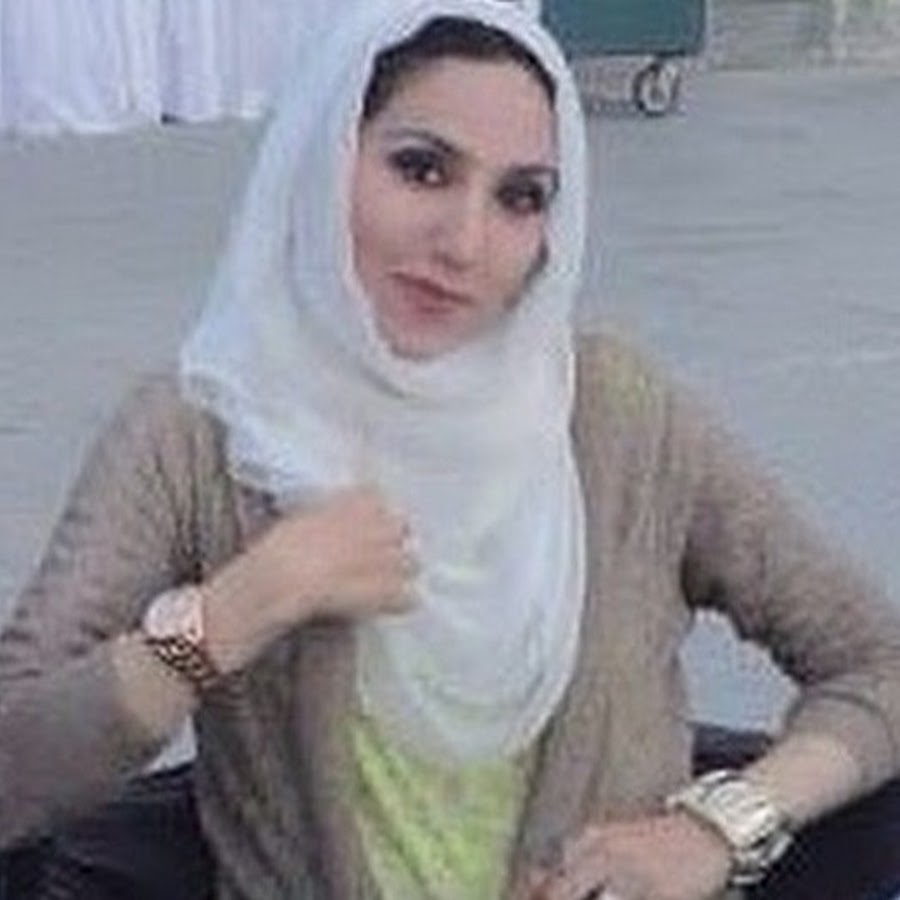
 Safiyyah Sabreen Syeed
I am a Science and Technology Studies researcher currently working on a UK Research and Innovation project examining the history of algorithms and AI, contributions of Islamic mathematicians and their contemporary relevance.
My academic background bridges science and the humanities, with a Bachelor's in Mechanical Engineering and a Master's in Philosophy. In 2023, I completed a Cert. in Arabic and began a second Master's in Islamic Studies.
After qualifying an All India exam, I received a University Fellowship and conducted research at IUST Kashmir on the relevance of Iqbalian metaphysics to quantum physics, consciousness, and fine-tuning.
I also worked as an Asst. Professor at Cluster University, teaching Bioethics, Philosophy of Science and Logic.
In 2019, I created a mini-film on the Islamic scientific tradition with a UAE-based media house. This led to my online series, *The Second Golden Age*, showcasing the impact of the Islamic scientific revolution on the modern world.
Safiyyah Sabreen Syeed
❤️
1 week ago | [YT] | 32
View 1 reply
Safiyyah Sabreen Syeed
🧠 Speaking more than one language slows cognitive decline.
Children (and adults) who speak and use multiple languages throughout life may give their brains a powerful form of mental exercise — potentially slowing brain aging and reducing risk of cognitive decline.
A major recent study of over 86,000 older adults across 27 European countries found that multilingual individuals were significantly less likely to show signs of accelerated “biobehavioral aging” compared to monolingual peers.
The researchers propose that the constant mental juggling required by switching between languages — selecting one language, suppressing interference from others, and managing shifting vocabularies — strengthens neural networks involved in memory, attention, and executive control.
Over time, these reinforced pathways may build what scientists call “cognitive reserve,” helping the brain remain resilient in the face of age-related change.
Source: Amoruso, L. et al. (2025). “Multilingualism protects against accelerated aging in cross‑sectional and longitudinal analyses of 27 European countries.” Nature Aging.
1 week ago | [YT] | 13
View 1 reply
Safiyyah Sabreen Syeed
Islamic mathematicians greatly progressed mathematics by synthesizing principles from Indian mathematics with Greek and other traditions, resulting in the emergence of new domains such as algebra and the refinement of established concepts like the decimal system and zero. They expanded the decimal place-value system by integrating decimal fractions and developed sophisticated algorithms for root extraction. Trigonometry evolved into a separate science, based on the Indian sine function, with scholars such as al-Khwarizmi and al-Marakushi producing extensive tables for sine, cosine, and cotangent. Al-Khwarizmi's methodical approach to algebra signified the formal establishment of the field, with the term "algebra" originating from "al-jabr," which denotes techniques for resolving linear and quadratic problems. The Indian decimal system was adopted and enhanced, as mathematicians such as al-Uqlidisi refined methods for practical use with pen and paper. Furthermore, whereas Indian intellectuals comprehended square and cube roots, Islamic mathematicians like Omar Khayyam and al-Karaji enhanced these methods to include roots of any degree. The collaboration among intellectuals throughout the Islamic world, from Baghdad to al-Andalus, enabled the widespread distribution of these mathematical advances, which were then transferred to Europe, significantly influencing the European Renaissance.
References:
- J.L.Berggren: History of Mathematics in the Islamic World: The Present State of the Art. Middle East Studies Association Bulletin 19(1985).
- J.L. Berggren: Episodes in the mathematics of Medieval Islam; Springer, 1986.
- A.Al Daffa: The Muslim Contribution to mathematics, Croom Helm, London; 1977.
Post originally from Facebook page Islamic history of sociology and science.
1 week ago | [YT] | 18
View 1 reply
Safiyyah Sabreen Syeed
I was invited by the President of the Association of Islamic Theology and Philosophy (Indonesia) to discuss the future of the study of philosophy and theology in university programmes. It was part of their Annual International Conference. I presented on the topic of Towards a Neo-Scientific Falsafa tradition : An interdisciplinary approach to contemporizing Islamic philosophy and theology.
I sincerely appreciate and applaud the efforts of Indonesian and Malaysian scholarship to keep the Islamic philosophical and theological tradition alive, thriving and enriched. The vision to revive and reconstruct Islamic Thought and Civilization is deeply rooted in hearts and minds of the Malay and Indonesian scholarship and institutions. May Allah give them felicity.
2 weeks ago | [YT] | 8
View 0 replies
Safiyyah Sabreen Syeed
🤣 Exactly my point !!! Like why brother ? Why?
3 weeks ago (edited) | [YT] | 22
View 0 replies
Safiyyah Sabreen Syeed
❤️
3 weeks ago | [YT] | 21
View 1 reply
Safiyyah Sabreen Syeed
This was an excellent event I was invited to. I loved Dr Kawtars talk on Islamophobia. It’s amazing how people work so sincerely for such great causes. Allah bless them.
3 weeks ago | [YT] | 13
View 1 reply
Safiyyah Sabreen Syeed
Delivering a presentation on Islamic Technology and the making of the contemporary world at the University of Liverpool
3 weeks ago | [YT] | 31
View 1 reply
Safiyyah Sabreen Syeed
Co-delivered this lecture to Sociology masters students at the University of Liverpool. We discussed how Computer Algorithms are culturally embedded social objects and why it’s important to understand them in this manner.
1 month ago | [YT] | 11
View 1 reply
Safiyyah Sabreen Syeed
❤️ life ❤️
These days will never come back. So be happy and enjoy them.
1 month ago | [YT] | 21
View 0 replies
Load more