 Ælfric Homily Project
A place for recitation of Old English homilies and their philology and theology.
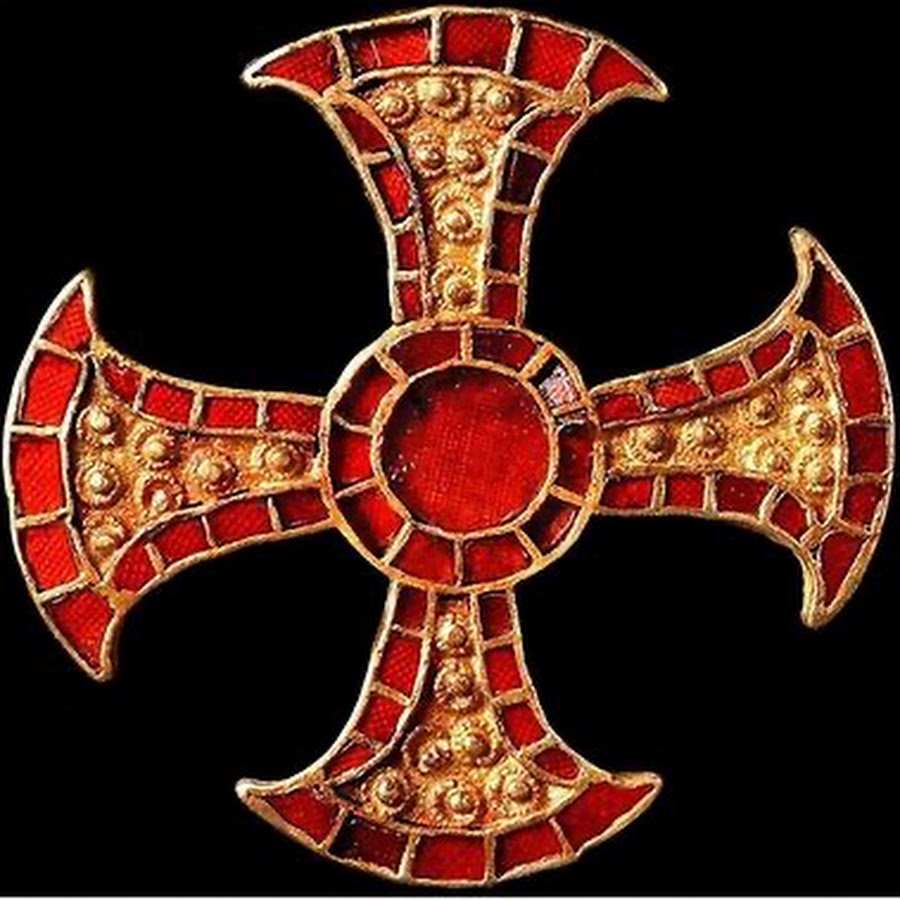
Profile picture provided by Cambridge University from a 7th century bed burial of a teenage girl near Cambridge: www.cam.ac.uk/research/news/mystery-of-anglo-saxon…
Ælfric Homily Project
Hello my wonderful fellow learners! I think you may enjoy this: myself, my twin brother, and our friend Shawn have a new show. We’ll be talking saints and other similar people. This first time we talk the king of East Anglia, Saint Edmund the Martyr, the first patron saint of England.
1 week ago | [YT] | 2
View 0 replies
Ælfric Homily Project
Ælfric’s first series homily on the feast of St. Clement, part 2:
Oft men of slight faith inquire with their foolish reason, why the Almighty God would ever permit that the heathen should slay his hallows with all kinds of punishments; but we will now relate to you some revelation from the old law, and also from the new, how mightily the Ruling Lord has frequently saved his holy from the heathen host or from cruel persecutors, and disgracefully confounded their adversaries. It happened in the fourteenth year of the reign of Hezekiah, the Jewish king, that Sennacherib, king of Assyria, had bowed many nations with great craft to his power, and so would he also the faithful king Hezekiah, and sent his general Rabshakeh to the city of Jerusalem with a great host, and by his letters disparaged the power of the Almighty God, thus saying to the beleaguered folk, "Let not Hezekiah deceive you with false hope, that God will save you against me. I have conquered and overcome many nations, and their gods could not shield them against my host. Who is the god that can defend this city against my army?" Indeed then, the king Hezekiah cast off his purple robe, and put haircloth on his body, and bare the letter into God's temple, and with outstretched limbs prayed, thus saying, "Lord, God of hosts, thou who sittest above the company of angels, thou alone art God of all nations; thou wroughtest heavens, and earth, and all creatures. Incline thine ear and hear, open thine eyes and see these words, which Sennacherib hath sent in contempt and slander to thee and thy folk. Soothly he overthrew and burned the heathen gods, for they were not gods, but were the handiwork of men, of wood and of stone, and he therefore brake them in pieces. Redeem us now, Lord, from his threatening and might, that all nations may know that thou alone art Almighty God." Hezekiah also sent his counsellors clad in sackcloth to the prophet Isaiah, thus saying, "Raise thy prayers for the people of Israel, that the Almighty God may hear the insults which the king of Assyria has sent in contempt and slander of his great glory." Then answered the prophet Isaiah to the messengers, "Say to your lord that he be fearless. God Almighty saith, Sennacherib shall not shoot arrows into the city of Jerusalem, nor with his shield conquer it; but I will cast a hook into his nose, and a bridle on his lips, and I will lead him back to his people, and I will cause him to fall under the sword's edge in his own country; and I will shield the city for myself and for my servant David." Then on that night God's angel went, and slew of the Assyrian king's army a hundred and eighty-five thousand men. On the morrow Sennacherib arose, and saw the dead bodies, and turned with great shame back to the city of Nineveh. It came to pass then that he was praying to his idol, and his two sons slew him with the sword, as the prophet through the Spirit of God had prophesied. After that Nebuchadnezzar, the Chaldean king, commanded to be bound hands and feet, the three believing youths, Hananiah, Azariah, and Mishael, and cast into a burning oven; because they would not pray to his idol. But the Almighty God, in whom they steadfastly believed, sent his angel into the oven with the youths, and he scattered the flame from the oven, so that the fire might not hurt them, but struck out of the oven nine and forty fathoms, and burned the executioners who had kindled the fire. Then the king beheld the hair and bodies of the three youths, thus saying, "Blessed be your God, who hath sent his angel, and so mightily released his servants from the burning oven." Also afterwards, in the days of Cyrus the king, the Babylonians accused the prophet Daniel, because he had cast down their idol, and said unanimously to the before said king Cyrus, "Deliver unto us Daniel, who hath cast down our god Bel, and slain the dragon, in which we believed. If thou protectest him, we will destroy thee and thine household." Then the king saw that they were unanimous, and unwillingly delivered the prophet into their hands. They then cast him into a pit, in which were seven lions, to which were given daily two rothers and two sheep, but then all food had been withheld from them for six days, that they might devour the man of God. At that time there was another prophet in the land of Judah, his name was Habakkuk, who bare for his reapers meat to the field. Then God's angel came to him, and said, "Habakkuk, bear the meat to Babylon, and give it to Daniel, who sitteth in the lions' pit." Habakkuk answered the angel, "Sir, I never saw the city, nor know I the pit." Then the angel seized him by the hair, and bare him to Babylon, and set him above the pit. Then Habakkuk cried, "Thou servant of God, Daniel, take this gift which God hath sent thee." Daniel said, "My Lord Healer, be to thee praise and honor, for that thou hast remembered me." And he then ate of the dish. Certainly the angel of the God straightways brought the dish-thane, Habakkuk, to the place whence he had before taken him. Then the king Cyrus on the seventh day went dreary to the lions' pit, and looked in, and behold, there was Daniel sitting unhurt in the midst of the lions. Then the king cried with a loud voice, "Great is the God in whom Daniel believeth." And he then with that word drew him from the den, and ordered those to be cast in who before would fordo him. The king's command was quickly executed, and the prophet's persecutors were thrust among the lions, and they straightways with greedy jaws tore them all in pieces. Then said the king, "Let all dwellers on earth fear and dread the God of Daniel, for he is the Releaser and Healer, working signs and wonders in heaven and on earth." In the New Testament, after Christ's suffering, and his arising and ascension to heaven, the Jews were filled with envy towards his apostles, and brought them into prison. In the same night God's angel undid the locks of the prison, and led them out, thus saying, "Go to the temple, and preach to the folk the word of life." And they so did. Then the Jews on the morrow deliberated concerning the destruction of the apostles, and sent to the prison, that they might be fetched. The executioners then opened the prison, and found no one. They then announced to their elders, "We have found the prison fast closed, and the wards standing without, but we found no one within." After that Herod, king of Judah, set the apostle Peter in prison bound with two chains, and wards within and without set: but on the night when the honorless king would on the morrow slay him, God's angel came shining from heaven, and led him out through the iron gates, and on the morrow the prison again stood fast locked. Domitian, the heathen emperor, commanded the evangelist John to be cast into boiling oil, but he, through God's protection, went out as unhurt as when he was cast in. To the same John an idolater gave poison to drink, but he, after the drink, sound and uninjured continued. Paul the apostle wrote concerning himself, and said, that he passed one day and one night at the sea-ground, Again, on a time a serpent seized him by the finger, but he shook it into the burning fire, and he felt nothing of the poison. No earthly man may by writings make known, nor with tongue relate how often the Almighty Ruler has saved his chosen from diverse perils, to the praise and honor of his majesty. But he very often allows the impious greatly to afflict his saints, sometimes with painful persecution, sometimes with slaying, that fierce persecution may end for the righteous in eternal rest, and for the murderers in eternal punishment. The psalmist said, "Many are the tribulations of the righteous, but the Lord from all these will release them." In two ways God releases his chosen, openly and secretly. Openly they are released, when in sight of men they are liberated, as we have now recounted to you. Secretly they are released, when through martyrdom they come to heavenly honours. If they suffer for true faith or for righteousness, they will then be martyrs. But if they are slain guiltless, their innocence will lead them to the fellowship of God's hallows; for innocence ever continues secure. But if any one suffers persecution for sins, and knows himself, so that he inwardly pray for God's mildheartedness, then will the transient punishment prevent eternal damnation. For crimes were the two scathers punished who were crucified with Christ, but one of them with great faith prayed to Christ, thus saying, "Lord, think of me when thou to thy kingdom comest." Christ answered him, "Sooth I say unto thee, now today thou shalt be with me in the mirth of paradise." Against our will we may lose the transitory good, but against our will we never lose the eternal good. Though the cruel robber bereave us of our property, or deprive us of life, he cannot take from us our faith or the eternal life, if we do not of our own will pervert ourselves. May the true Lord save us from all dangers, and us to everlasting life lead, who liveth and reigneth ever without end. Amen.
2 weeks ago | [YT] | 3
View 0 replies
Ælfric Homily Project
Ælfric’s first series homily for the feast of St. Clement, part 1:
Most beloved men, your faith will be the firmer, if ye hear concerning God's hallows, how they the heavenly kingdom earned; and ye may the more certainly call to them, if the course of their lives, through the preaching of teachers, be known to you. This holy man Clement, whom we on this present festival honor, was of the blessed apostle Peter a disciple. Then was he thriving in ghostly lore and diligence so greatly, that the apostle Peter chose him for pope of the Roman people after his day, and ere his suffering ordained him pope, and placed him in his bishop seat, that he might care of christian men have. He had ordained twain bishops ere, Linus and Cletus, but he did not place them in his settle, as he did this holy man, whom today we honor. Clement then after Peter's suffering prospered in fairness of good customs, so that he was acceptable to Jews, and heathens, and christians together. By the heathen people he was liked, for he did not insult their gods with contempt, but with bookly reasoning manifested to them what they were, and where born whom they honored as their gods, and showed to them, with manifest proofs, their suffering and endings; and said that they themselves might easily attain to God's mercy, if from their erroneous worship wholly turned. The favor of the Jewish people he beget, for he truly proved that their forefathers were called God’s friends, and that God set them a holy law for their lives' guidance; and said, that they would have been foremost in God's choice, if with faith they had obeyed his commandments. By the christians he was most beloved, for he had all lands by name in his mind, and then permitted not the ill fortuned christians of those nations to be reduced to open begging, but with daily preaching he reminded the rich and wealthy to alleviate the poverty of the christians with their success, lest through the heathen people’s gifts they should be polluted. And Dionysius, God's witness, who through Paul the Apostle’s lore and miracles had with holy life turned to the faith of Christ, returned at that time from Greek-land to the holy pope Clement, Peter's after-goer, and he with great honor received him, and in veneration expressly released to him his holy life, and with love retained him. Again after a time said the blessed Clement to the holy man Dionysius, "Be to thee given might to bind and to loose, just as there is to me; and go thou to the realm of the Franks, and preach to them the gospel and the heaven's kingdom glory." Dionysius then was obedient to his commands, and with his companions fared to Frankland, preaching christendom with great wonders so mightily, that the cruel heathen, as soon as they him saw, either falling down sought his feet, obeying him and God, or if any one of them were hostile, he was seized with so great fright, that he at once fled from his presence. Then was all the Franks’ realm inclined to God's belief, through the preaching and miracles of the blessed man Dionysius; and he also some of his companions to Spain sent, to declare the word of life to that nation. Indeed then, Clement, the Romans' pope, was denounced to the caesar Trajan, for the great christianity which everywhere in his kingdom he had reared. Then sent the emperor Trajan letters back, that the holy pope Clement should bow to heathenism, or should be sent over sea in exile to a waste, to which christian men condemned for belief were banished. The caesar’s hest was then advanced, and so so great grace provided the Almighty God for Clement, that the heathen judge his journey with weeping bemoaned, thus saying, "May the God whom thou worshipest comfort and assist thee in thy exile." And he ordered then him to be led to a ship, and all his needs to be provided for, which he might have for provision. The ship was then filled with christian men, who would the holy pope forsake not. When he came to the waste, then he found there more than two thousand christian people, who with protracted condemnation were set to the delving of marble, who greatly become fain at his coming, with one voice saying, "Behold here is our shepherd, behold here is the comforter of our travail and work." When he with encouraging words their afflicted minds had confirmed and comforted, then he heard that they daily over six miles fetched water for themselves on their shoulders. Then said the blessed bishop, "Let us pray with fast faith to the Lord Jesus, to open closer at hand for us his professors the veins of his wellsprings, that we may in his acts of kindness rejoice." When this prayer was complete, then the bishop beheld on each side, and saw on the right side a white lamb standing, which beckoned with his right foot, as if it would reveal the water-vein. Then understood Clement the lamb's beckoning, and said, "Open the earth in this place where the lamb beckoned." His companions fulfilled his behest, and immediately at the first digging an immense wellspring sounded out, and with a great stream ran forth. Indeed they all greatly rejoiced, and thanked God for this mercy of their toil. Then was the saying fulfilled, which they said at the bishop's coming, "Behold here is our shepherd, behold here is the comforter of our travail." This wonder then sprang over the shires at hand, and they all visited the holy bishop with reverence, praying that he with his lore strengthen them. He then them all to God's faith converted, and within a few days there five hundred men baptized; and many churches were raised everywhere, and devil-tribute overthrown; so that within one year’s time heathen-sacrifice was not found throughout a neighbourhood of a hundred miles. Then it happened that some of the heathens were with envy provoked, and sent their errand to the emperor, and announced to him that his folk were at last all excited, and wholly from his worship turned, through Clement, the christians' bishop. Then was the heathen caesar, Trajan, greatly excited, and sent a cruel commander, his name was Aufidianus, who with miscellaneous torments many christian men killed, that he might destroy the holy bishop with the faithful folk. The honorless murderer then, Aufidianus, when he could not by any threats the christians terrify, for they all rejoicing together hastened to martyrdom, left the folk and would compel the bishop alone to idolatry; but when he saw that he could not in any way bend him, he said to his servants, "Lead him to the middle of the sea, and tie an anchor to his neck, and thrust him out into the middle of the deep." It was then done by command of the cruel murderer, and a great multitude of the christians stood on the sea strand, weeping and praying to the Almighty, who the sea and earth shaped, that they might his holy body with their services attend. Then said his two disciples Phœbus and Cornelius, "O ye brothers, let us unanimously pray to our Lord, that he manifest to us the honest presence of his holy witness." Behold then, the sea, at God's behest, flowing out, cleared for them three miles of dry passage, so that the christians boldly went in, and found a new coffin of marble-stone shaped in the form of a church, and the holy witness’s body placed therein through the ministry of angels, and the anchor by his side lying. Then was revealed to them that they should obtain from God, that in the course of every year, at the time of his suffering, the sea for seven days should prepare dry ground for the people, that they within that time might seek his holy body. That happens to the praise and honor of our Healer, who prepared the honorable sepulchre for his holy witness. Then through this miracle all the unbelieving became christians, so that there was not found in the country either heathen or Jew that was not converted to the christian faith. But at the holy coffin heavenly cures are permitted for diseased bodies, through the intercession of the holy witness. Whosoever sick on his festival seeks his tomb, returns rejoicing and healthy. There are the blind enlightened, and the devil-sick restored to reason, and all afflicted are there made joyful; and all the faithful enjoy his benefits, and with reverence God's mysteries are there fulfilled. It came to pass in one year at his festival, that a woman with her tender child among others visited the holy man. When the days of the festival were ended, the sea came suddenly sounding, and the folk hastened away with all speed, and the woman, through the sudden commotion, heeded not her child before she came to land. She then in sorrow the twelve months endured, and again after the revolution of the year, at the same festival, ran before the folk, and approached the sepulchre with weeping, thus praying, "Thou Lord Jesus, who didst raise the widow's only son to life, look on me in mercy, that I, through the intercession of thy holy one who here resteth, may obtain that for which I fervently pray." Then with this prayer she looked to the place where she had before the child left, and found it so sleeping as she had previously laid it. She then with great joy awakened it, and weeping kissed it. Then she asked the child, between the kisses, how it had fared in all the time of the year's course? The child the mother answered, "Mother mine, I know not how this year's course has ended, for I was resting in soft sleep, as thou didst leave me, until thou now again hast awakened me." The believing folk then greatly rejoicing, praised and blessed the Almighty Healer, who honors his saints with signs and wonders, and so manifests their merits.
2 weeks ago | [YT] | 3
View 0 replies
Ælfric Homily Project
I had planned to have Ælfric’s De Falsis Diis ready for October, but the month has been exceptionally busy for me. I will have to delay it until after the New Year, and I am hard at work for November and December videos.
1 month ago | [YT] | 2
View 0 replies
Ælfric Homily Project
Ælfric’s first series homily on the dedication of the church of Michael the Archangel, part 2.
Indeed, he who humbles himself like this child, he will be greater in the kingdom of heaven, and he who receives one in my name receives me. He who offends one of these littles ones who believe in me, it would be better for him if his neck were tied to a millstone and he were sunk in the deep sea. Woe to middle-earth for offenses! It is needful that offenses come, but woe to the one from whom offenses come. If thine hand or thine foot offends thee, cut off that limb and cast it from thee. It is better for thee to go maimed or halt into eternal life than for thou to be to be sent with all your limbs to eternal fire. If your eye offends, hollow it out and cast it from thee. It is better for thee to travel one eyed to heaven than to be thrown with two eyes into eternal torment. Take care that you do not despise one of these littles ones; I say to you that their angels always see the face of my Father who is in the heavens.’” Haymo expounds this gospel, and says, how the emperor's toll-gatherers asked Peter the apostle, when they were over all middle-earth gathering toll for the emperor; they said, "Will your lord Christ give any toll? Then said Peter, that he would. Then when Peter would ask the Healer, Jesus, who knows all things, prevented him, thus saying, What thinkest thou, Peter, of whom do earthly kings take tribute or toll, of their own relations, or of strangers? Peter said, Of strangers. The Healer said, What, are their relations free? Lest we should offend them, go to the sea, and cast out thine hook, and of the fish which first swalloweth it, open the mouth, then wilt thou find therein a golden coin: take that, and give as toll for me and for thee." Then for that reason, that he said, "Give for me and for thee," the apostles imagined that Peter was first, and asked Jesus, "Who was the foremost of men in the kingdom of heaven?" Then would the Healer their erroneous thoughts with true humility heal, and said, that they could not come to the kingdom of heaven, unless they were as humble and as innocent as the child was which he to him called. An innocent child desires no other person’s possessions, nor a beauteous woman; though it be vexed it holds no lasting animosity towards those who injured it, nor feigns it with words, so that it think one thing, and say another. So also should God's followers, that is, christians, have that innocence in their mind which a child has in its age. The Healer said, "Truth I say unto you, ye shall not come to the kingdom of heaven, unless ye are changed and become as littlings." He did not command to his disciples that they should be children in body, but that they should hold the innocence of innocent children in their conduct. In one place he said, when a child was brought to him to be blessed, and his disciples reproved it, "Permit these children to come unto me, for of such is truly the kingdom of heaven." Of this the apostle Paul admonished his followers, and said, "Be ye not children in understanding, but in evilnesses: be complete in understanding." The Healer said, "Whosoever humbleth himself like this child, he shall be first in the kingdom of heaven." Let us have true humility in our lives, if we will have high dignity in God's kingdom, as the Healer said, "Each of those who exalt themselves shall be humbled, and he who humbleth himself shall be raised up." He has the innocence of a innocent child, who is displeasing to himself that he may be pleasing to God; and he will be so much the fairer in the sight of God as he will be the more humble before himself. "He who receives one such little one in my name, receives myself." To all God's poor we should minister benefactions, though above all to the humble and mild, who in their life's conduct conform to the commandments of Christ; for he will be served by serving his poor, and he himself will be received by receiving them. He said also in another place, "He who receiveth a prophet shall have a prophet's reward; he who receiveth a righteous man shall have a righteous man's reward."That is, He who receives a prophet, or a righteous servant of God, and provides sustenance for him for love of God, shall then have as great a reward from God for his bountifulness, as if he himself were a prophet, or a righteous servant of God. "He who offends one of these little ones, who believe in me, better were it for him that an immense quernstone were tied to his neck, and he were so sunk in the deep sea." He offends another who deceives him on the part of God, so that his soul be lost. The millstone which turns unceasingly, and accomplishes no course, betokens love of the world, which circulates in errors, and secures no step in the way of God. Of such the prophet said, "The wicked turn in a circle." He who enters upon a holy order in God's congregation, and afterwards by instigation or by sinful life gives evil example to others, and perverts their understanding, then better were it for him that he alone perished in his worldly life, than that he in holy guise should draw others with him to ruin through his depraved morals. "Woe to the middle-earth for offences." The world are here called those who love this fleeting middle-earth more than everlasting life, and with diverse offences turn away themselves and others. "It is needful that offences come, yet woe to the man from whom they come." This world is so filled with errors, that it cannot be without offences, and yet woe to the man who deceives another in his property, or in his soul, and for him it shall be worse, who with evil persuasion deceives another man's soul to eternal destruction. "If thine hand or thy foot offend thee, cut off the limb, and cast it from thee." This is said according to a spiritual betokening, not as a bodily law. God commanded no man to destroy his limbs. The hand betokens our needful friend, who daily with work and help ministers to our need; but though, if such friend entice us from the way of God, then will it be better for us that we cut off from us his fleshly love, and by separation cast it away, than that we, through his evil persuasion, together with him fall into eternal destruction. Also it is with the foot and the eye. If any relation be as dear to thee as thine eye, and another as needful to thee as thy hand, and one as serviceable as thy own foot, if they then perversely persuade thee to thy soul's destruction, better will it be for thee that thou shun their fellowship, than that they lead thee on with them to eternal ruin. "Perform so that ye despise not one of these little ones." He who deceives one of God's servants angers the Lord, as he himself through his prophet said, "He who toucheth you, it shall be to me as offensive as if he touched the sight of mine eye." "I say unto you that their angels ever see the countenance of my Father who is in heaven." By these words is manifested that over every faithful person an angel is set as a shepherd, who against the devil's machination shields him, and supports him in holy virtues, as the psalm-shaper said of every righteous man, "God hath commanded his angels concerning thee, that they may keep thee, and lift thee in their hands, lest thou stumble thy foot against a stone." It is a great honour for christian men, that everyone has from his birth an angel assigned to him in fellowship, as it is written of the apostle Peter, when the angel led him from the prison, and he came to his companions, and knocking for admission bade. Then said the faithful, "It is not Peter who there knocketh, but is his angel." But those angels, whom God has set as guardians over his chosen, never depart from his presence; for God is everywhere, and whithersoever the angels fly, ever they are in his presence, and of his glory partake. They announce our works and prayers to the Almighty, though to him nothing is hidden, as the high-angel Raphael said to the man of God, Tobias, "When ye prayed, I offered your prayers before God.” The old law informs us that high-angels are set over every nation, that they may take care of the people, over the other angels, as Moses, in the fifth book of the old law, in these words revealed, "When God on high divided and dispersed Adam's offspring, he set the boundaries of nations according to the number of his angels." In this sense agrees the prophet Daniel in his prophecy. A certain angel of God spake to Daniel concerning the high-angel who directed the Persian people, and said, "The high-angel came to me, the prince of the Greek people, and there is none of these my supporter, save Michael, the prince of the Hebrew folk. Even just, Michael, one of the first princes, came to me in aid, and I continued there with the king of the Persian nation." By these words is revealed how great care the high-angels have of their authority over mankind, when he said that Michael came to his assistance. It is now credible that the high-angel Michael has care of christian men, who was prince of the Hebrew folk, while they believed in God; and that he manifested when he timbered himself a church among a believing people on mount Garganus, just as we have read a little before. It is done by God's dispensation, that the great heavenly angel is the constant supporter of christian men on earth, and their intercessor in heaven with Almighty God, who liveth and reigneth to all eternity. Amen
2 months ago | [YT] | 2
View 0 replies
Ælfric Homily Project
Ælfric’s first series homily on the dedication of the church of Michael the Archangel, part one.
To many men is known the holy place of St. Michael, on the mount which is called Garganus. The mountain stands on the land of Campania’s borders, towards the Adriatic sea, twelve miles in ascent from a town which is called Sepontina. From that place was established this day's festival throughout the faithful church. There dwelt a certain very rich man called Garganus: from what befell him the mountain was so named. It came about when the immeasurable greatness of his cattle were on the mountain grazing, that a reckless bull was rogue and scorned the herd-drove. So the master Garganus gathered a great many of his domestic servants, and the bull everywhere in the waste sought, and at last found him standing on the knoll of the high mount, at the entrance of a cave; and he with anger was stirred, because the solitary bull had rejected his herd, and bent his bow, and with a poisoned arrow would shoot him; but the poisoned arrow turned back as if by the wind's breath thrown, and at once slew him who had shot it. His kinsmen then and neighbours were severely astonished by that deed, and not one of them durst draw near the bull. They then counsel of their bishop asked, what they should do concerning the matter. The bishop then found it advisable, that they with three days of fasting should ask from God an explanation of the wonder. Then on the third night of the fast the high-angel Michael himself appeared to the bishop in a ghostly vision, thus saying, "Wisely ye did, that ye to God sought that which was concealed from men. Know thou certainly, that the man who with his own arrow was shot, that it was done with my will. I am Michael, the high-angel of God Almighty, and I continually in his sight dwell. I say to thee that I particularly love the place which the bull defended, and I would with that sign manifest that I am the keeper of the place; and of all the signs which there happen, I am the observer and governor." And the high-angel with these words to heaven departed. The bishop recounted his vision to the burghers, and they afterwards customarily thither sought, and earnestly prayed to the living God and his high-angel Michael. Two doors they saw in the church, and the south door was some deal larger, from which there lay steps to the west part: but they durst not visit the holy house with entrance, but daily fervently at the door they prayed. Then at the same time the Neapolitans, who yet in heathenism dwelled, declared war against the inhabitants of the city of Sepontina, who worshiped the holy place, and against Beneventans. They then, with their bishop’s guidance, prayed for a three day period, that they might in those three days, with fasting beg the succour of the high-angel Michael. The heathen also in like manner, with gifts and offerings, diligently implored their false gods for security and shielding. Lo, then in the night on the morrow of which the fight was to take place, the high-angel Michael himself appeared to the bishop, and said, that he had heard their prayers, and promised them his aid, and commanded them to array themselves against their foes one hour after morning-tide. They then on the morrow blithe and without-worry, through the angel's promise, and with faith in his help, marched against the heathens. Then immediately at the beginning of the fight the mount Garganus was trembling with intense quaking, and great lightning flew from the mountain just as it were arrows against the heathen folk, and the knoll of the mount was with dark clouds all overhung. Indeed the heathen with affrighted mind took to flight, and just as they were shot with fiery arrows, they were beset by the weapons of the christians from behind, until they their city Naples, half-alive, sought. Truly those who escaped from the danger, acknowledged that God's angel came to the help of the christians, and they straightways submitted their necks to Christ, and with his faith became armed. Verily of that slaughter there were numbered six hundred men with the fiery arrows shot. The christians then victory-fast with great confidence and bliss returned home, and brought their promise to the temple to Almighty God and his high-angel Michael. Then saw they before the church’s north door, on the marble stone, as it were a man's footprints firmly on the stone impressed, and they then understood that the high-angel Michael would manifest that token of his presence. They then immediately thereover raised a church and an altar, to the praise of the high-angel, who had stood in that place protecting them. Then was there a great doubt among the citizens concerning the church, whether they should go in, or should hallow it. Whereupon they raised a church in the east part of the place, and hallowed it to the honour of the apostle Peter, and therein set an altar to St. Mary, and John the Baptist. Then at last the bishop sent to the pope, and asked him, how they were to do concerning the high-angel's building. The pope to this errand thus answered, "If it is allowed to men to hallow the church which the high-angel himself built, then the hallowing ought to be on the day on which he gave you victory, through the grace of the Almighty. If aught else should gladden the high-angel, ask his will on the same day." When this answer was to the bishop announced, he enjoined to his fellow-city-inhabitants a fast of three days, and prayed to the Holy Trinity that a certain sign might be revealed him concerning their doubt. The high-angel Michael then, on the third night of the fast, said to the bishop in a dream, "There is no need for you to hallow the church which I have built. I myself timbered and hallowed it. But go into the church fearlessly, and in my presence visit the place according to custom with prayers; and thou there sing mass to-morrow, and let the folk, after the divine rites, go to the Eucharist; and I will then show how I through myself hallowed the place." They then straightway on the morrow went blithely thither with their offerings, and with great unity of their prayers went in on the south part. Lo then they saw a long porch on the north part stretching very near to the marble stone, on which the angel standing had his foot-prints revealed. On the east part was seen a great church to which they stepmeal ascended. The church with its portico could easily contain in its space five hundred men: and there stood, placed against the middle of the south wall, a venerable altar, with a red pall covered. That house was not constructed after the fashion of men, but had divers towers at the corners, in likeness of a cave. The roof also was of various height: in one place a man might reach it with his head, in another with his hand difficultly. I believe that the high-angel with the revelation that he much more sought and loved cleanness of heart than the adornment of stones. The mountain's knoll without is partly overgrown with wood, and also partly with the green field overspread. Truly after the mass and the holy housel-walk every one with great joy returned to his own. The bishop then placed God's servants there, singers, and readers, and priests, that they might daily there perform God's service in a fitting manner; and a monastic house to be there built for them commanded. There is, however, no person daring to that degree that he dares to come within the church in the night-time, but at day-red, when God's servants are singing God's praise therein. From the roof-stone on the north portion of the holy altar there runs drop by drop water very pure and sweet, which those who dwelt in the place called 'stilla,' that is drop. There is hung a glass vat with a silver chain-tie, which receives the winsome moisture. The folk’s wont, after the housel, is to go up step by step to the vessel, and taste the heavenly fluid. The fluid is very pleasant of taste, and very healthful to the touch. Verily very many after a tedious fever and diverse sicknesses, through drinking this fluid, speedily enjoy their health. Also in another manner, innumerable sick are there often and frequently healed, and many wonders, through the high-angel's power, are there performed; but chiefly on this day, when the people from every nation visit the place, and the angel's presence is there in some measure most sensible, that the words of the apostle may be bodily fulfilled, that which he spake spiritually: he said, that "angels shall be sent as ministering spirits from God hither into the world, that they may be for a succour to his chosen, that they may receive the eternal country with him." GOSPEL: Came the disciples unto Jesus, saying, Who is the greatest in the kingdom of heaven? This day's gospel says, that "The Lord's disciples approached him, thus saying, Lo sir, which is the first of men in the kingdom of heaven? The Healer then called to him a little child, and bade him to stand in their midst, and said, ‘Truly I say unto you, you will not fare into the kingdom of heaven unless you are changed and become just as a child.
2 months ago | [YT] | 3
View 0 replies
Ælfric Homily Project
Ælfric’s first series homily on the Assumption of Mary, part 2:
God's chosen shine in heavenly glory each according to his lot; now it is to be believed that the blessed queen with so great glory and brightness transcends others, as great as her merits are incomparable with other saints. The Lord said before his ascension, that in his Father's house are many dwellings: truly we believe that he now today gave to his beloved mother the most pleasant dwelling. The glory of God's chosen is measured according to their merits, and is not any murmuring nor malice in any of them, but they all dwell in true love and precious peace, and each joys in another's lot just as in his own. I bid you, rejoice in this festival: certainly now today that glory-full maiden ascended to the heavens, that she, unspeakably with Christ exalted in eternal reign. The heavenly queen was today taken from this wicked world. Again I said, celebrate for she came free of care to the heavenly house. Let all middle-earth be glad, for now today, through her earnings, to us all is increased happiness. Through our old mother Eve the gates of heaven's kingdom was locked, and after through Mary it is opened to us, through that she herself now today gloriously entered. God through his prophets commanded us that we must praise and make great him in his hallows, in whom he is wonderful: much more suitable is it that we on this great feast-tide of his blessed mother, should worship him with praise-songs and honor-full praises; for undoubtedly all her honor is praise of God. Let us now therefore with all kindness of our heart honor this great feast-tide, for the path of our salvation is in praise-songs of our Lord. Then in maidenhood continues they rejoicing, for they have earned to be that which they praise: let them have care that they be such that they worthily may praise. Then those who are in clean widowhood praise her and honor, for it is evident that they cannot be pure except through grace of Christ, which was complete in Mary whom they praise. Let those also who are in wedlock praise and honor her, for thence flows to all mildheartedness and grace that they may praise her. If any one be sinful, let him confess, and by no means praise, though praise not be beautiful in the sinful mouth; nevertheless fail not the praising, for thence is promised him forgiveness. This epistle is very complex for us to interpret, and very deep for you to hear. Now it is not convenient to us to speak more concerning it, but we wish to narrate some other edifying material concerning the mother of God, to your bettering. Truly Mary is the greatest comfort and help of christian people, that is very often revealed, just as we read in books. Some man was with sorcery seduced, so that he denied Christ, and wrote his agreement to the malign devil, and established homage. His name was Theophilus. He then after bethought himself, and then had rolled hellish pain in his mind; and went to some church which was to the praise of the blessed Mary hallowed, and therein so long with weeping and fasting beseeched for her aid and intercession, until she herself with great glory came to him, and said, that she had interceded with the Heavenly Judge, her own Son. We will also narrate to you concerning the ending of the wicked contender of God, Julian. There was some holy bishop named Basilius, who had learned in a school, and together with the same Julian. Then it occurred so that Basilius was chosen to be bishop to a city which is called Cappadocia, and Julian to be caesar, though he before was shorn for a priest. Julian then began to love heathen-idols, and his christendom renounced, and with all his heart practiced heathenship, and forced his people to the same. Then at some time turned to harrying against the Persian nation, and met the bishop, and said to him, "Hello, thou Basilius, now I have exceeded thee in philosophy." The bishop answered him, "God gave thou to cultivate philosophy:" and he with that word offered him such a gift as he himself enjoyed, that was three barley loaves, for a blessing. Then commanded the apostate the loaves to be received, and to be given to the bishop in return, grass, and said, "He has gave us beasts' food, let him receive the reward of grass." Basilius received that grass, thus saying, "Oh thou caesar, truly we have given that which we ourselves partake, and thou gave to us ill-reward the unreasonable beasts' sustenance, not as food to us, but to insult." The enemy of God then became angry, and said, "When I turn from this campaign I will overthrow this city, and cause it to become smooth, and to turn it to plow-land, so that it will be corn-bearing rather than man-bearing. It is not unknown to me thy daring, and these town-inhabitants, which through thy exhortation the idol, which I raised and prayed to, brake to pieces and cast down." And he with these words went to the Persian land. Indeed then Basilius made known to his fellow-citizens the caesar's cruel threat, and was the best counsel-bearer, thus saying, "My brothers, bring your wealth, and let us try, if we can, to gladden the cruel contender on his return." They then with glad hearts brought to him of gold, and of silver, and precious gems, an immeasurable heap. The bishop then received the mathoms, and commanded his priests and all the folk, that they should offer their gifts within the temple that was hallowed to the honor of the blessed mary, and bade them therein abide with a fast for three days, that the Almighty Ruler, through his mother's intercession might turn to naught the plan of the unrighteous caesar. Then on the third night of the fast the bishop saw a great heavenly host on each side of the temple, and in the midst of the of the host sat the heavenly queen mary, and said to her attendants, "Send to me the martyr Mecurius, that he may go against the wicked betrayer Julian, and slay him, who with puffed up spirit renounced my Son." The holy martyr Mercurius speedily came armed, and by her order went. Then wend the bishop into the other church, in which the martyr lay, and asked the church-ward where the hallow's weapons were? He swore that he in the evening he certainly saw them at his head. And he straightaway returned to Saint Mary's temple, and to the folk he made known what he had seen, and the destruction of the cruel. Then went he again to the holy martyr's tomb, and found his spear standing with blood bloodied. Then after three days came one of the emperor's thanes, called Libanius, and sought the bishop's feet, praying for baptism, and declared to him and all the citizens of the death of the wicked Julian: said that the army was quartered against the river Euphrates, and seven watch-posts watched over the emperor. Then came there stepping some unknown champion, and furiously drove through, and straightaways of their sight vanished; and Jullian then with a dreadful outcry perished. So were the citizens saved through Saint Mary against the adversary of God. Then the bishop offered their treasure to the citizens, but they said that they would offer their gifts to the immortal King, who so mightily defended them, much rather than to the mortal murderer. The bishop, nevertheless, compelled the folk to receive a third part of the wealth, and he with two parts endowed the minster. If any one inquires how this happened, then we say, that this martyr had spent his life in a lay status; when because of the heathen people's persecution for the belief in Christ, he was martyred; and Christian men afterwards his holy body deposited honorably in the temple, and together with his weapons. After, when the holy queen sent him, just as we now before said somewhat; then went his ghost swiftly, and with bodily weapon stabbed the enemy of God, his guards onlooking. My brothers dearest, let us call with constant prayers to the holy mother of God, that she in our necessities with her Son intercede. It is very believable that he will grant much to her, who vouchsafed through her to be born a human for the rescuing of middle-earth, who is ever God without beginning, and now continues, in one nature, true man and true God, ever to eternity. So as every man exists in soul and body one person, so is Christ, God and man, one Healer, who lives and reigns with the Father and the Holy Ghost in the world of all worlds. Amen.
3 months ago | [YT] | 1
View 0 replies
Ælfric Homily Project
Ælfric’s first series homily on the Assumption of Mary, part 1:
Jerome the holy priest wrote an epistle concerning the death of the blessed Mary, God's mother, to some holy maiden, whose name was Eustochium, and to her mother Paula, who was a hallowed widow. To these two women wrote the same Jerome manifold commentaries; for they were persons of holy life, and very diligent in bookly inquiries. This Jerome was a holy priest, and educated in the Hebrew language, and in Greek, and in Latin, perfectly; and he turned our library of Hebrew books to Latin speech. He is the foremost interpreter between the Hebrews, and Greeks, and Latiners. Seventy two books the old law and the new he translated into Latin to one Bible, besides many other treatises which he with diligent understanding deep-thinkingly examined. Then at last he arranged this epistle the holy widow Paula, and to the maiden of God, Eustochium, her daughter, and to all the maidenly company, who were with them living, thus saying: "Certainly ye compel me that I will unfold a tale to you how the blessed Mary, on this present day to heavenly dwelling was taken up, that your maidenly company have this gift in the Latin speech, how this great feast-day over every year's course is spent with heavenly praise, and with ghostly bliss is celebrated, lest the false decree should come to your hand which through heretics is widely sown, and ye then receive the contrived falsity for a true reckoning. Truly from the beginning of the holy gospel ye learned how the high-angel Gabriel proclaimed to the blessed maiden Mary the birth of the heavenly Atheling, and the wonders of the Healer, and the blessed mother of God's ministry, and her life's deeds in the four gospel books revealed. John the Gospeller wrote on Christ's suffering, that he himself and Mary stood with dreary heart beside the holy rood, on which the Healer was fastened. Then said he to his own mother, "Thou woman, behold here is thy son." After he said to John, "Look now, here stands thy mother." Afterwards, from that day, had the Evangelist John care of the holy Mary, and with careful service, obeyed just as if she was his own mother. The Lord, through his piety, committed the blessed maiden his mother to the clean man John, who has ever dwelled in pure virginity; and he particularly was beloved of the Lord, so much so that he would entrust to him that dear-worth treasure, the queen of all middle-earth; certainly that her cleanest maidenhead might be associated with that chaste man with gratifying fellowship in winsome conduct. In them both was one virtue of perfect virginity, but a second thing in Mary; in here is fruitful virginity, so as in no other. In no other person is there virginity if there be fruitfulness; no fruitfulness if there be whole maidenhood. Now is therefore hallowed both Mary's maidenhood and her fruitfulness through the godlike birth; and she transcends all others in maidenhood and in fruitfulness. Nevertheless though she was especially committed to the care of John, yet she lived commonly, after Christ's ascension, with the apostolic company, going in and out among them, and they all with great piety and love served her, and she openly all things about Christ's humanity informed; for she had from the beginning exactly learned all them through the Holy Ghost, and seen them with her own sight; though the apostles understood all things through the same Ghost, and in all soothfastness were taught. The high-angel Gabriel held her unspotted, and she continued in the care of John and in all the apostles, in the heavenly troop, about God's law thinking, until God on this day took her to the heavenly glory-seat, and over the host of angels elevated her. There is not read in any book any manifest information about her ending, except that she now today gloriously from the body departed. Her tomb is observable to all onlookers to this present day, in the middle of the valley of Jehosaphat. The valley is between Mount Zion and the mount of Olives, and the tomb appears open and empty, and thereupon in her honor is raised a great church with wondrous stonework. There is not any mortal person knows how, or at what time her holy body was brought from thence, or whither it be heaved up, or whether she arose from death: said though some teachers, that her Son, who on the third day mightily from death arose, that he also his mother's body from death raised, and with immortal glory united it in the kingdom of heaven. Even so in like very many teachers in their books set, concerning the requickening people who with Christ arose from death, that they are everlastingly reared. Truly they recognize that those raised people would not have been true witnesses of Christ's arising, except they were eternally reared. Nor do we against-say concerning the blessed Mary's eternal resurrection, though, for caution to preserve faith, it befits us that we hope rather than we foolishly assert it that which is unknown without any peril. We read everywhere in books, that very often angels came to good people's departure, and with ghostly praise-songs their souls to the heavens led. And, that yet is more clear, people have heard at the departure the song of men and women, with great light and sweet scent: in this is known that those holy men who come to God's kingdom through good merits, that they at other people's departure receive their souls, and with great bliss lead them to rest. Now if the Healer manifested such honor oft in his hallows' departure, and commanded their ghosts fetched with heavenly hymns, how much rather thinkest thou that he would now today send the heavenly host to meet his own mother, that they with immeasurably light and unutterable praise-songs they to the glory-seat lead her which was prepared from the beginning of middle-earth. There is no doubt that all the heavenly host then with unutterable bliss would celebrate her coming. Soothly also we believe that the Lord himself came towards her, and pleasantly with joy by his glory-seat set her: certainly he would fulfill through himself what he in his law commanded, thus saying, "Honor thy father and thy mother." He is his own witness that he honored his Father, just as he said to the Jews, "I honor mine Father, and ye dishonor me." In his humanity he honored his mother, when he was, just as the holy gospel says, subjected to her in his youthhood. Much more is it to be believed that it came to pass that he with unspeakable honor holds his mother in his kingdom, when he would after his humanity in this life obey her. This feast-day surmounts incomparably all other hallows' mass-days, as much as this holy maiden, the mother of God, is incomparable with all other maidens. This feast-day to us is yearly, but it is to heaven-citizens perpetual. From the heavenly queen's ascension the Holy Ghost in praise-songs wondered, thus inquiring, "What is this that here ascends like the arising daybreak, as beautiful as the moon, as choice as the sun, and as terrible a steadfast-army?" The Holy Ghost wondered, for he caused all heaven-dwellers to wonder at the ascension of this woman. Mary is more beautiful than the moon, for she shines without exhaustion of her brightness. She is choice as the sun with beams of heavenly virtue, for the Lord, who is the sun of righteousness, chose her for his mother. Her going is compared to a strong military, for she was fortified with holy powers, and with throngs of angels. Of this heavenly queen is yet said through the same Spirit of God: he says, "I saw the beauteous one as a dove rising over the streaming stream, and an ineffable odor steamed from her attire; and, so as in the spring-tide, rose blossoms and lilies surrounded her." The rose blossoms betoken with their redness martyrdom, and the lilies with their whiteness betoken the shining cleanness of sound maidenhead. All the chosen who God prospers through martyrdom or through purity, all they journeyed with the blessed queen; for she is herself both martyr and maiden. She is as beautiful as a dove, for she loved mildness, which the Holy Ghost betokened, when he was seen in the likeness of a dove over Christ at his baptism. Other martyrs in their bodies suffered martyrdom for the faith of Christ, but the blessed Mary was not bodily martyred, but her soul was greatly vexed with great suffering, when she stood sad before Christ's rood, and saw her beloved child with iron nails fastened on the the hard tree. Now is she greater than a martyr, for she suffering that martyrdom in her soul which other martyrs suffered in their bodies. She loved Christ over all other people, and therefore was also her affliction for him greater than other people's, and she made his death as her own death, for his suffering pierced her soul as a sword. She is deprived of no holy virtue, nor any beauty, nor any brightness; and therefore she was encircled with roses and lilies, that her virtues were with virtues supported, and her fairness with the beauty of cleanness was increased.
3 months ago | [YT] | 1
View 0 replies
Ælfric Homily Project
The August homily is coming, but right now you can enjoy this discussion I had with Graham Scheper. His grace makes up for any uncouthery on my part!
4 months ago | [YT] | 3
View 0 replies
Ælfric Homily Project
Ælfric’s Lives of Saints homily on St. Swithin, part 3:
His kinsmen then carried the man to Hallow Swithun, and he himself confessed his unwise words, that he had foolishly spoken, and entreated forgiveness from him, and he was healed, so that he went home hale with his kinsmen. It is also to be conscious, that people do unwisely when they erringly jest at dead men's corpses, and render by their play any foulness, when they should rather sorrow for the dead, and dread the themselves death's coming, and pray for his soul earnestly without fury. Some people also drink at a person's body all the night most unrighteously, and provoke God with their lewd speech, whereas no beer-drinking is seemly at a wake, but rather holy prayers there are fitting. At one time there came to the hallow a hundred and twenty men, diversely afflicted with many diseases, and they were all wondrously healed within three weeks, and they returned home, thanking Almighty God and the venerable Swithun. A certain thane's servant fell suddenly from his horse that his arm and left leg broke, and he was so much crushed that they immediately thought he would at once die before them. He had been very dear to his lord before, and the lord then lamented greatly for the servant, and bade the Almighty with inmost heart, that he would help the man through the celebrated Swithun. He cried also to Swithun, thus saying with lamentation, “O thou holy Swithun, beseech the Healer that he may life give to this sick servant, and I will be for this the more faithful to the living God all my days, if he does this through thee.”Then the servant arose, healed whole through Saint Swithun, and the lord rejoiced, and with faith praised God. Some old thane in the Isle of Wight also was ill, so that he lay bedridden some nine years, and could not leave the bed except he were carried. To him came then in a dream two shining saints, and bade him quickly run with them. Then said the sick man, “How can I run with you when I have not arisen from this bed alone, now for nine years with another person's help?” Then said the saints, “Thou will come to that place, if thou go with us now, where thou shalt receive thy health.” He was then very fain, and desired to go with them; but when he could not journey with them, then flew they through the air, and bare the sick man until they came to a solitary field, fairly blooming, and there was a church of shining gold and of gem-stones, standing in the field; and the hallow Swithun, in shining mass-vestments, stood before the altar, as if about to say mass. Swithun said then straightway to the sick man, “I tell thee, brother, that henceforth thou shalt not do evil to any man, nor curse any man, nor speak evil of any man, nor be full-of-reproach, nor consent to manslayers, nor connive with wicked reavers nor thieves, nor join in evil deeds; but rather help, as best thou canst, needy men with thine own goods, and thou thyself shalt be by the power of God healed.” Then the sick man reflected that he did not wish to do evil except only to those who before had done evil to him, and that he wished to do well to those who had done well to him before. Then knew the Hallow Swithun how his heart reasoned, and said blithely to him, “Brother, I tell thee, do not, as thou considerest, harm to any man though he may harm thee, but imitate thy Lord, Who would not curse those who put him to death, and bade his followers pray for their enemies. Also said Paul the Apostle to all Christian people, ‘If thine enemy hunger, feed him with food, or if he thirst, give thou him drink.’” Then said the bedridden man after to the bishop, “O sir, tell me what manner of man thou art, since thou canst men's hearts so discern.” Then said the holy Swithun, “I am he who now newly came,” as if he had said, “I was now newly manifested.” Then said the bedridden man to the bishop again, “How art thou called?” and the hallow said to him, “When thou comest to Winchester, thou shalt know my name.” The man was brought to his bed again immediately, and awoke from sleep, and told his wife all the vision that he had seen. Then said the wife to him, that, it was Swithun who had instructed him in this holy precept, and whom he had seen in the church so fair. She said then to her husband, “It were now full well that men should carry thee to church, and thou shouldst pray to the hallow that he would heal thee through his holy works.” They bare the man then forthwith from his bed to a church in the Isle of Wight, and he was healed at once by the Almighty God, for Swithun's merits, and went him then home whole on his feet, who before was borne on a bier to church. He went also afterwards very quickly to Winchester, and told the honor-worthy bishop Athelwold how he had been healed through the holy Swithun; and Landferth, the foreigner, set it down in Latin. Now is it to be known, that we ought not at all trust too much to dreams, because they not all be of God. Some dreams are truly from God, even as we read in books, and some are from the devil for some treachery, how he may the soul ruin, but his illusions cannot harm the good, if they consecrate themselves and commend themselves to God. Those dreams are pleasant which come from God, and those are fearful which of the devil come; and God himself forbade us to follow dreams, lest the devil could deceive us. A certain man in Winchester was irate with his serf for some carelessness, and set him in fetters. He sat there a long time in the hated bonds until he bestealed out, by help of his staff hopping, and sought Saint Swithun with groaning. The bolt at once shot out of the fetter, and the thrall rose up, freed by the saint. A certain man was bound about the head for his heavy guilt; he came to the hallow, and his sore head-bond soon burst as he prayed. We cannot write, nor in words recount, all the wonders that the holy man Swithun by the power of God performed in the sight of the people, both on prisoners, and unhealthy people, to manifest to mankind that they themselves may earn the kingdom of heaven by good works, even as Swithun did, who now shines through his wonders. The old church was all hung round with crutches, and with the stools of cripples, from one end to the other on either wall, who had been there healed, and not even so could they put half of them up. Such tokens declare that Christ is Almighty God, who revealed his hallow by such good deeds, though the Jews, deceived by the devil, will not believe in the living Christ, until Antichrist shall be destroyed by God. Then will those wretched people, with all who remain at the end of this world, submit themselves with faith to Christ, and the men of old will be lost who formerly would not believe. We have now said thus shortly of Swithun, and we say of a truth that the time was blessed and winsome in England, when King Eadgar furthered Christianity, and built many monasteries, and his kingdom still continued in peace, so that no person heard of a ship-army, save that of the people themselves who held this land; and all the kings of this island, Cymry and Scots, came to Edgar once upon a day, being eight kings, and they all bowed themselves to Edgar's rule. Moreover, were such miracles wrought through Saint Swithun, as we said before, and as long as we have lived frequent wonders were done there. At that time were also worthy bishops, Dunstan the persevering, in the archbishopric, and Athelwold the honor-worthy, and others of like; but Dunstan and Athelwold were of the Lord chosen, and they, most of all, exhorted men to God's will, and every good established, to the satisfaction of God, as reveals the miracles which God works through them.
4 months ago | [YT] | 2
View 0 replies
Load more