
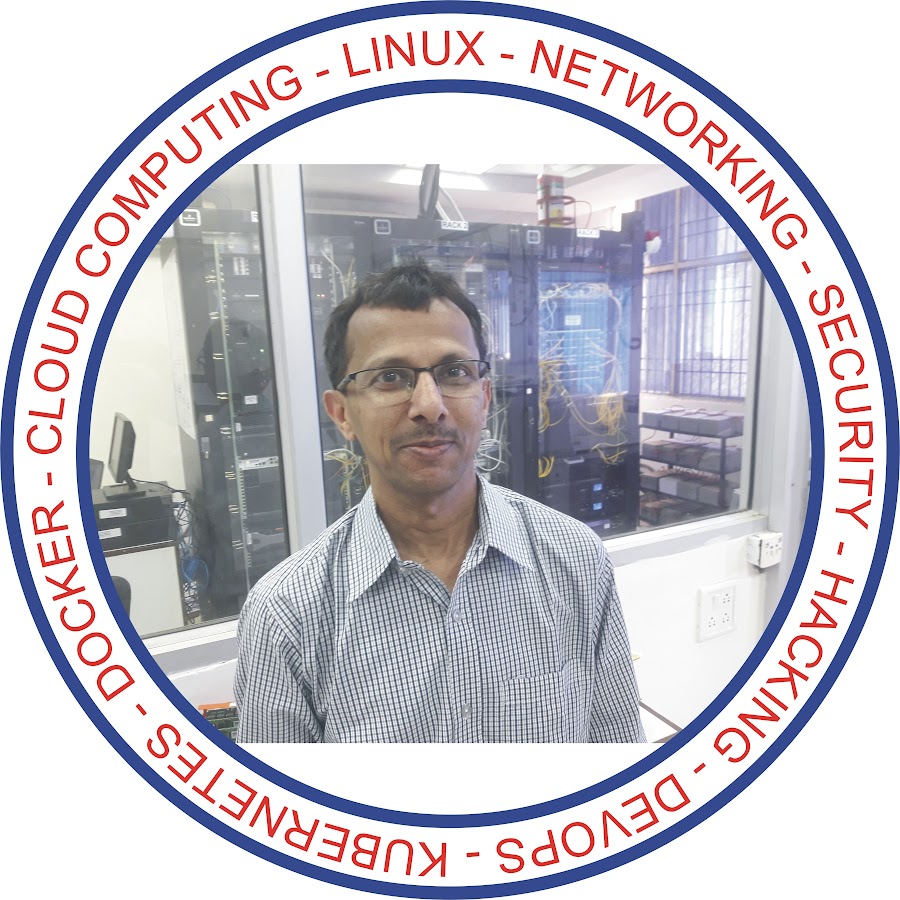
 TechTrends with Vipin Gupta
Vipin Gupta, an accomplished IT professional with over 30 years of experience, established this channel during the uncertain times of the COVID-19 pandemic. Motivated by a desire to share his extensive knowledge, he embarked on a mission to provide valuable educational content.
With a wealth of expertise in networking, security, Linux, Cloud Computing, Docker, Kubernetes, SDN, Vipin Gupta has established himself as a specialist in these domains. Throughout his illustrious career, he has actively engaged with numerous institutions, including universities, engineering colleges, polytechnics, private institutes, and the corporate sector.
Recognising the importance of practical training, Vipin Gupta has conducted thousands of workshops and short-term courses, enabling individuals to gain hands-on experience with various technologies. Furthermore, he has developed over 16 online courses, leveraging digital platforms to reach a wider audience and provide accessible learning opportunities.
TechTrends with Vipin Gupta
Docker Hands-On Course
Welcome to "Docker Hands-On" an extensive course designed to provide you with a comprehensive understanding of Docker and its application in deploying, managing, and scaling various types of applications. This course is meticulously crafted for developers, system administrators, and IT professionals who aim to enhance their skills in containerization, streamline their development workflows, and optimize the deployment processes using Docker.
Docker has revolutionized the way we develop, ship, and run applications. It enables developers to package applications and their dependencies into a standardized unit called a container, ensuring consistency across multiple environments. This course covers a wide range of topics, from the basics of Docker to advanced deployment strategies, helping you gain hands-on experience and practical knowledge.
www.udemy.com/course/docker-hands-on-course/?refer…
Course Contents
- Understand the fundamental concepts of Docker, including images, containers, and Docker architecture.
- Step-by-step guide to installing Docker
- Dockerizing Nginx: From Basics to Advanced Port Publishing
- Deploying Apache Web Server with Docker: Interactive to Detached Modes
- Docker Networking Introduction
- Explore bridge networking and its default configuration in Docker.
- Deploy a container using bridge networking and understand its connectivity.
- Understand the host networking mode and its use cases.
- Learn about the none networking mode for isolating containers.
- Advanced networking configurations using container network mode.
- Introduction to Docker's ephemeral storage and its lifecycle.
- Persistent Storage Using Bind Mount
- Create Storage and Use It in Container Using Volumes
- storage configurations using the mount command
- Understand the structure and syntax of a Dockerfile
- Deploy Basic Python Application Using Dockerfile
- Launch Multistage GCC Application
- Deploy a static website using a Dockerfile with custom configuration.
- Docker Compose Introduction
- Deploy PHP Application with a MariaDB Database Using Docker Compose
- Deploy WordPress Using Docker Compose
- Deploy Flask Redis Application Using Docker Compose
- Deploying Multiple Web Servers with Unique IP Addresses Using Macvlan
- Step-by-step guide to deploying a web application using Docker's bridge network
- How to Deploy Nginx Web Server on the Host Network
- How to Run a Batch Processing Job in an Isolated Container
- Develop a thumbnail generator application using NodeJS and Express.
- Run MariaDB and phpMyAdmin with Docker
- Setting up Private Docker Registry
- Docker Swarm
By the end of this course, you will have the knowledge and skills to confidently deploy, manage, and scale applications using Docker, making you a valuable asset in any modern IT environment. Enroll now and take the first step towards mastering Docker and transforming the way you develop and deploy applications.
Who this course is for:
- Anyone who wants to lean about Docker and Containers
- Developers: Looking to streamline their development workflows and ensure consistency across different environments.
- System Administrators: Seeking to enhance their skills in containerization and optimize application deployment processes.
- IT Professionals: Aiming to gain a comprehensive understanding of Docker and its practical applications in modern IT environments.
- Students: Interested in learning about containerization and Docker to prepare for a career in software development or IT operations.
1 year ago | [YT] | 1
View 0 replies
TechTrends with Vipin Gupta
Practice Tests | Test Your Kubernetes Skills
Assess, refine, conquer: the path to Kubernetes mastery
www.udemy.com/course/test-your-kubernetes-skills/?…
The course contains the Kubernetes questions, that test your knowledge of Kubernetes.
- 3 Practice Tests contains YAML based Multiple-choice questions (MCQs) and Multi-Select Questions (MSQ) on Kubernetes
- 2 Practice Tests contains generic Multiple-choice questions (MCQs) and Multi-Select Questions (MSQ) are based on Kubernetes
Plus
- 1 Bonus Jumbo Practice Test (featuring over 100 challenging questions)
- Total 425+ questions.
About Kubernetes:
Kubernetes has emerged as the de facto standard for container orchestration in modern software development and deployment. Its popularity stems from a variety of compelling reasons, ranging from scalability and portability to automation and resource efficiency.
Kubernetes excels in managing containerized applications at scale. In today's dynamic computing environments, where applications need to scale up and down rapidly to meet fluctuating demand, Kubernetes provides a robust platform for automating the deployment, scaling, and management of containerized workloads. Its declarative model allows developers to specify the desired state of their applications, and Kubernetes takes care of ensuring that the actual state matches the desired state, even as conditions change.
Portability is another key advantage of Kubernetes. With Kubernetes, developers can build their applications once and then deploy them consistently across a variety of environments, from on-premises data centers to public cloud providers like AWS, Azure, and Google Cloud Platform. This portability reduces vendor lock-in and enables organizations to adopt a multi-cloud strategy, leveraging the strengths of different cloud providers while avoiding being tied to any one of them.
Kubernetes fosters a culture of automation, enabling teams to streamline their development and operations workflows. By abstracting away the underlying infrastructure and providing a unified API for managing applications, Kubernetes allows developers to focus on writing code rather than worrying about the nitty-gritty details of deployment and scaling. This automation accelerates the pace of software delivery, enabling organizations to release new features and updates more frequently and reliably.
Resource efficiency is also a major benefit of Kubernetes. By optimizing resource utilization and packing multiple containers onto each host, Kubernetes helps organizations make the most of their infrastructure investments. Kubernetes can automatically scale applications based on demand, spinning up additional instances when traffic spikes and scaling them down during periods of low activity. This elasticity ensures that resources are allocated efficiently, minimizing waste and reducing operational costs.
In addition to these technical advantages, Kubernetes has a vibrant ecosystem and strong community support. The Kubernetes community is large and active, with thousands of contributors from across the globe working together to improve the platform and develop new features. This collaborative approach has led to rapid innovation and a rich ecosystem of tools and technologies that complement Kubernetes, including monitoring and logging solutions, continuous integration and delivery pipelines, and security and compliance tools.
Furthermore, Kubernetes is highly extensible and customizable, allowing organizations to tailor the platform to their specific needs. Whether it's integrating with existing systems and workflows or adding custom functionality through plugins and extensions, Kubernetes provides the flexibility to adapt to a wide range of use cases and requirements.
Finally, Kubernetes is future-proof, providing a solid foundation for building cloud-native applications that can scale and evolve with changing business needs. As organizations continue to embrace digital transformation and adopt cloud-native architectures, Kubernetes will play an increasingly central role in enabling these initiatives.
In conclusion, Kubernetes offers a compelling set of features and benefits that make it the platform of choice for container orchestration in today's fast-paced world of software development and deployment. From scalability and portability to automation and resource efficiency, Kubernetes provides the tools and capabilities that organizations need to build, deploy, and manage modern applications at scale. As such, it's no wonder that Kubernetes has become the cornerstone of cloud-native computing and a key enabler of digital innovation.
About Kubernetes Practice Tests
YAML and generic Multiple-choice questions (MCQs) and Multi-Select Questions (MSQ) based on Kubernetes can be a valuable learning tool for several reasons:
Application of Knowledge: Questions based on YAML files require understanding of Kubernetes object specifications and syntax. By answering these questions, learners can apply their knowledge of Kubernetes concepts in a practical context.
Testing Understanding: Questions assess the depth of understanding a learner has about Kubernetes. They can cover various aspects such as pod configurations, service definitions, deployment strategies, and more.
Immediate Feedback: Questions provide instant feedback on whether the answer selected is correct or incorrect. This immediate feedback helps learners identify areas of weakness and reinforce understanding.
Focus on Key Concepts: Crafting questions requires careful selection of concepts deemed important. By answering these questions, learners can focus on mastering these key concepts essential for working with Kubernetes.
Critical Thinking: Well-designed questions can also require critical thinking skills, especially if they include scenarios or require learners to analyze YAML files to identify errors or best practices.
Efficiency: Questions can cover a wide range of topics in a relatively short amount of time. This efficiency is particularly useful for learners who want to review their understanding or test their knowledge within a constrained timeframe.
Engagement: Questions can be engaging, especially when designed with interesting scenarios or challenges. This engagement can enhance the learning experience and motivate learners to delve deeper into Kubernetes concepts.
Retention: Research shows that active recall, which questions promote, enhances retention of information over time. By regularly engaging with questions, learners can reinforce their understanding of Kubernetes concepts and retain knowledge for longer periods.
Overall, questions based on Kubernetes serve as a practical and efficient tool for assessing and reinforcing knowledge of Kubernetes concepts, syntax, and best practices.
Who this course is for:
Anyone who wants to test Kubernetes skill set
1 year ago (edited) | [YT] | 1
View 0 replies
TechTrends with Vipin Gupta
The "AWS Certified Cloud Practitioner CLF-C02 Practice Exams" is a comprehensive and meticulously crafted course designed to prepare individuals for the AWS Certified Cloud Practitioner (CLF-C02) exam. Tailored for beginners and professionals alike, this course offers a deep dive into the fundamental concepts of cloud computing, AWS services, and best practices through a series of practice exams.
www.udemy.com/course/practice-exams-aws-certified-…
Key Features:
Exam-Style Questions:
The course is structured around exam-style questions that closely mimic the format and complexity of the actual AWS Certified Cloud Practitioner exam. These questions are strategically designed to cover all the essential topics, ensuring a thorough understanding of the exam objectives.
Realistic Simulation:
The practice exams provide a realistic simulation of the AWS Certified Cloud Practitioner exam environment. This simulation helps candidates become familiar with the exam interface, time constraints, and question types, fostering confidence and reducing exam-related stress.
Comprehensive Coverage:
The course covers all the key domains outlined in the AWS Certified Cloud Practitioner exam guide, including cloud concepts, security, pricing, billing, and AWS services. Each practice exam is meticulously crafted to address specific knowledge areas, enabling candidates to identify and strengthen their weak points.
To-the-point explanations Explanations:
Every question in the practice exams comes with to-the-point explanations.
Continuous Updates:
Cloud technology evolves rapidly, and so do certification exams. The course will be regularly updated to align with the latest changes in the AWS Certified Cloud Practitioner exam blueprint. This ensures that candidates are well-prepared for the most current exam content and requirements.
1 year ago | [YT] | 0
View 0 replies
TechTrends with Vipin Gupta
Kubernetes for Absolute Beginners - Hands-on
(Learn Kubernetes in easy way with hands-on training, build your own Kubernetes cluster for practice easily)
www.udemy.com/course/kubernetes-for-absolute-begin…
Welcome to the Kubernetes for Absolute Beginners course, your ultimate gateway into the fascinating world of container orchestration and cloud-native application management. Whether you're a budding developer, IT professional, or technology enthusiast, this course will equip you with the fundamental knowledge and practical skills needed to harness the power of Kubernetes and revolutionize your approach to application deployment.
Kubernetes is a complex concept involving many components. Understanding how these components work individually and in combination is necessary for understanding Kubernetes. For understanding complex relation among different building blocks of Kubernetes, creation of high quality diagrams is must. We have explained each concept with the help of diagrams and demos. We have also covered how to build your own single node and multi node clusters.
Why Learn Kubernetes?
Kubernetes has rapidly emerged as the de facto standard for managing containerized applications, enabling organizations to streamline their development and deployment processes with unparalleled efficiency and scalability. As businesses increasingly transition to cloud-based solutions, mastering Kubernetes becomes essential to stay competitive in the ever-evolving tech landscape. This course is designed for absolute beginners, requiring no prior knowledge of Kubernetes or containerization, making it accessible to anyone with a passion for learning and an interest in modern software development.
What Will You Learn?
This course is meticulously crafted to guide you through every aspect of Kubernetes, starting with the foundational concepts and gradually progressing to more advanced topics.
Who is this course for?
Anyone who wants to get started in Kubernetes, Developers, System Administrators
What are the requirements or prerequisites for taking your course?
This course is designed for absolute beginners, requiring no prior knowledge of Kubernetes or containerization.
What will students learn in your course?
- What is Kubernetes. What is relation between Docker and Kubernetes. Understand VM vs Containers vs Pods
- Create Pods using CLI,Create Pods using "YAML" file, Understand pod to pod, node to pod communications, How to send traffic to pods
- Understand and manage pod labels, How to use ReplicaSets. How to use match label and match expression selector, How to create Kubernetes deployment
- How to scale up using ReplicaSets and Deployments, How to use Rolling Update Strategy, How to perform rollback
- How to send traffic to Pods using Kubernetes services object, How to use ClusterIP service, How to use NodePort service
- How to use fixed NodePort service, How to use Load Balancer service, How to build Single Node, Multi Node Kubernetes cluster
2 years ago | [YT] | 0
View 0 replies
TechTrends with Vipin Gupta
AWS Certified Cloud Practitioner (CLF-C01) - Hands On course will start from cloud computing overview and step by step will take you to the various concepts required for preparing the exam. This course is going to be lengthy but very interesting and useful.
There are more than 200 services in AWS, but we are going to cover those which are required for preparation of exam. Some services will be covered in details while others will be given passing reference.
This course cover most of the topics required for the AWS Certified Cloud Practitioner (CLF-C01)
.
We will be adding new material from time to time in the course to make it more useful with the passage of time. The course is designed in such a way that it will impart the knowledge, So that you can deploy resources in the cloud.
www.udemy.com/course/aws-certified-cloud-practitio…
The main feature of course are:
Theory as well as Hands on
Quizzes
Practice Tests
Customised Diagrams
Why to join this course ?
- More focus on making your fundamentals strong.
- How to properly set up the Labs (State of Art Labs) for learning the concepts has been covered (Hands-On Approach).
- Customised Diagrams (We strongly believe that a picture is worth a thousand words).
- Unique innovative style of teaching.
- More than 27 years of experience in Hands-on training.
What you will learn in this course
- Cloud Computing overview
- What is Infrastructure As A Service (IAAS)
- What is Platform As A Service (PAAS)
- What is Software As A Service (SAAS)
- Cloud computing Models
- Advantages of using Cloud
- AWS Global Infrastructure
- AWS Shared Responsibility Model
- AWS Elastic Cloud Compute (EC2)
- AWS Pricing Calculator
- Create Linux Instance
- Using Putty to connect to Linux Instance
- Implement Apache Web Server on Linux Instance
- Create Windows Instance
- Tools Used For Accessing Cloud
- Elastic Block Storage (EBS)
- Simple Storage Service (S3)
- Elastic File System (EFS)
- Relational Database Service (RDS)
- Security and Compliance concepts
- DynamoDB
- Create and Use Custom AMI
- Virtual Private Cloud (VPC)
- Deploy Application in Custom VPC using best practices
- Elastic Load Balancer (ELB)
- Application Load Balancer (ALB)
- Network Load Balancer (NLB)
- Identity and Access Management (IAM)
- Well-Architected Framework
- AWS CloudWatch and SNS
- AWS CloudFront
- Auto Scaling
- AWS Route 53
3 years ago | [YT] | 3
View 0 replies
TechTrends with Vipin Gupta
Amazon Web Services (AWS) - Hands On Course
www.udemy.com/course/hands-on-aws/?referralCode=27…
What you'll learn
- Learn basic cloud computing concepts
- Gain Hands On skils core Amazon Elastic Cloud Compute (EC2), Amazon Simple Storage Service (S3), Amazon Virtual Private Cloud (VPC))
- Develop knowledge of basic level concepts as well as advance concepts
- Develop Hands on skills on Elastic Load Balancer (ELB), Application Load Balancer (ALB), Network Load Balancer (NLB), Identity and Access Management (IAM)
- How To Use Amazon Relational Database Service (RDS), AWS Cloud9
- Develop Hands On skills on deploying application in custom VPC with frontend running in public subnet and database in private subnet
- Learn How to Deploy Applications Using Best Practices
- Learn How To Use Auto Scaling
- Learn How To Combine Various concepts such as AWC Virtual Private Cloud, Creating and Using Custom AMI, Elastic Load Balancer, Auto Scaling and Cloud9
- Learn How To Use AWS Route53, Link it with Domain Hosted on Providers like GoDaddy, Different Routing Policies and Health Checks.
Description
This Amazon Web Services (AWS) - Hands On will start from cloud computing introduction, cover AWS core concepts as well as advance concepts. The concepts are covered using Hands On Labs.
Learning cloud computing is an effective way of entering into high paying career. This course can help you getting started with Amazon Web Service (AWS).
Why to join this course ?
- More focus on making your fundamentals strong.
- How to properly set up the Labs (State of Art Labs) for learning the concepts has been covered (Hands-On Approach).
- Customised Diagrams (We strongly believe that a picture is worth a thousand words).
- Unique innovative style of teaching.
- More than 25 years of experience in Hands-on training.
What you will learn in this course
- Cloud Computing Introduction
- What is Infrastructure As A Service (IAAS)
- What is Platform As A Service (PAAS)
- What is Storage As A Service (SAAS)
- What is Software As A Service (SAAS)
- Working With Amazon Web Services (AWS)
- AWS Elastic Cloud Compute (EC2) Introduction
- What are the Various Steps Required for creating Virtual Servers
- Create Linux Instance
- Using Putty to connect to Linux Instance
- Implement Apache Web Server on Linux Instance
- Create Windows Instance
- Implement IIS Web Server on Windows Instance
- Tools Used For Accessing Cloud
- What are different storage technologies. What is DAS, NAS and SAN.
- Elastic Block Storage (EBS) Hands On
- Simple Storage Service (S3) Hands On
- Elastic File System (EFS) Hands on
- Create and Access Relational Database Service (RDS) Hands On
- Create and Use Custom AMI
- Virtual Private Cloud (VPC) Introduction
- Create VPC Using Wizard
- Deploy PHP/MySQL Application in Custom VPC having 2 public and 2 private subnets
- Elastic Load Balancer (ELB) Introduction
- Application Load Balancer (ALB) Hands On
- Path Based Routing Using ALB
- Network Load Balancer (NLB) Hands On
- Identity & Access Management (IAM) Introduction
- Create IAM Users, Groups and Roles
- AWS Cloud9 IDE
- AWS CloudWatch and SNS Hands On
- Launch Template and Auto Scaling Hands On
- Demo of Combining Various concepts such as AWC Virtual Private Cloud, Creating and Using Custom AMI, Elastic Load Balancer, Auto Scaling and Cloud9
- AWS Route53 Hands On
Who this course is for:
Anyone who wants to learn about cloud computing
Anyone who wants to learn about Amazon Web Service (AWS) core services
Anyone who wants to deploy servers on AWS
Anyone who wants to learn about best practices in deploying applications in Cloud
Anyone who wants to learn about Amazon Web Service (AWS) advance concepts
Anyone who wants to go for cloud certifications
4 years ago (edited) | [YT] | 2
View 2 replies
TechTrends with Vipin Gupta
Courses at Minimal Price (Till September 10)
Why to join a course
- More focus on making your fundamentals strong.
- How to properly set up the Labs (State of Art Labs) for learning the concepts has been covered (Hands On Approach).
- Customized Diagrams (We strongly believe that a picture is worth a thousand words).
- Unique innovative style of teaching.
- More than 25 years of experience in Hands on training.
Amazon Web Services (AWS) - Hands On Course
www.udemy.com/course/hands-on-aws/?couponCode=COUP…
Mastering BIND DNS Course
www.udemy.com/course/mastering-bind-dns/?couponCod…
Mastering Iptables Firewall Course
www.udemy.com/course/mastering-iptables-firewall/?…
Kubernetes For Beginners Course
www.udemy.com/course/k8s-for-beginners/?couponCode…
IP Addressing and Subnetting: Practical Approach Course
www.udemy.com/course/ip-address-subnetting/?coupon…
Apache Web Server Course
www.udemy.com/course/apache-web/?couponCode=COUPON…
Linux Essentials Course
www.udemy.com/course/linux-essentials/?couponCode=…
Mastering Docker Course
www.udemy.com/course/docker-made-simple/?couponCod…
Software Defined Networking (SDN) Made Simple Course
www.udemy.com/course/sdn-made-simple/?couponCode=C…
4 years ago (edited) | [YT] | 3
View 0 replies