Journey deep into the Maya jungle through rare archived documentary footage, as explorers trek through dense vegetation in search of ancient Maya cities, pyramids, temples, ruins and forgotten works of art. What makes this old footage especially interesting are the discoveries inside the ruins—including surviving murals and wall paintings depicting the ancient Maya themselves. Some of these images preserve striking dark, swarthy complexions and features that can be seen directly in the artwork captured by the documentary cameras. This is a journey back into an earlier era of Maya exploration, when many archaeological sites were still heavily engulfed by the jungle and the experience of reaching these ancient structures was very different from visiting the restored sites we know today. Rare footage. Ancient cities. Hidden temples. Original Maya artwork. Let’s explore the Maya jungle and see what the old cameras recorded. Hope you enjoy.
In Part 8, we return directly to old historical books and accounts to examine how prominent European kings, queens, princes, philosophers and nobles were actually described — using the words of the historical writers themselves.
This episode examines **William the Silent (William of Orange)** through three separate sources describing him as having a **“brown complexion”** and **“swarthy complexion”** with chestnut hair.
We also examine descriptions of:
• **Mary I of England** — “Swarthy Complexion” • **Catherine of Aragon** — “Bright Brunette Complexion” and “Swarthy, Sallow Complexion” • **Anne Boleyn** — “Warm, Brunette Complexion” and black eyes • **Charles II** — described by his own mother, Henrietta Maria, as **“so black”** as an infant • **François, Duke of Anjou** — called a **“little blackamoor”** • **Baruch Spinoza** — described with **“Skin somewhat black”** and “black curl’d Hair,” with the account connecting his appearance to his Portuguese Jewish ancestry • **Charles I of Anjou** — described as **“dark-skinned almost as a Moor”** and elsewhere as a **“black man”**
These are not descriptions I created. We are opening the historical sources and reading what THEY wrote.
This is **Part 8 of Black Europeans Uncovered** and another addition to a much larger archive of historical evidence presented throughout this channel.
As always, don't take my word for it.
**Read the sources. See the evidence. Come to your own conclusions.**
Long before Marvel introduced the world to Black Panther and the fictional African nation of Wakanda, the Americas already had an ancient history of BLACK PANTHERS, JAGUAR WARRIORS, sacred Panther/Jaguar traditions — and WAKANDA itself.
In this newly remastered version of my original 2018 presentation, we go back through the historical, scientific, archaeological and cultural sources and examine a story that deserves to be remembered in its proper American context.
First, what exactly is a “Black Panther”?
There is no separate species called the Black Panther. In the Americas, the Black Panther is the melanistic JAGUAR — Panthera onca. We examine the black Jaguar of the Americas, melanism, the genetics behind its black coat, and how it differs from the black leopards of Africa and Asia.
Then we go much deeper into the ancient American Jaguar tradition.
Throughout ancient America, the Jaguar was far more than an animal. It represented power, warfare, rulership, the night, spiritual vision, the underworld and the supernatural.
Ancient American civilizations had elite JAGUAR WARRIORS — human warriors who dressed in the skin and image of the Jaguar. We examine their training, their military role, Jaguar suits and masks, sacred Jaguar deities, Jaguar temples, kingship and coronation rituals, shamans, human-feline imagery and the mysterious “Were-Jaguar” transformation figures found throughout ancient American art.
Human beings taking on the identity and power of the Panther/Jaguar was already an ancient American tradition.
And then there is WAKANDA.
Wakanda / Wakonda was already an American Indian sacred word associated with the Supreme Being, Creator and Great Spirit. Variations of the name remain preserved across the American landscape in towns, lakes, parks and other locations.
We also explore HUACA / WAK'A and the ancient sacred traditions of Central and South America, adding another fascinating layer to the sacred terminology preserved throughout the Americas.
Now place all of this history side by side:
BLACK PANTHER • BLACK JAGUAR • JAGUAR WARRIORS • JAGUAR GODS • HUMAN-JAGUAR TRANSFORMATION • SACRED PANTHER POWER • KINGSHIP • CORONATION • NIGHT & UNDERWORLD • WAKANDA / WAKONDA • GREAT SPIRIT • HUACA / WAK'A
And there is still another piece to the story.
We examine the historical Black Panther political symbol in Alabama and its appearance BEFORE Marvel's Black Panther character debuted in 1966.
So where does the REAL history behind these names, symbols and traditions lead us?
This isn't simply a video about a Marvel superhero.
This is a journey into the BLACK PANTHER, the JAGUAR WARRIOR and WAKANDA in AMERICAN history.
The traditions were already here.
The words were already here.
The symbolism was already here.
It's time to give the ancient peoples of America their proper place in the story.
Watch the sources. Examine the images. Follow the history and come to your own conclusions.
We have all been taught that America was named after the European explorer Amerigo Vespucci—but does the historical record actually support that story?
In this presentation, we are going deep into the primary sources, early histories, maps, Indigenous traditions, names and records surrounding one of the most famous names on Earth.
We will examine AMARACA / AMARACAPANA in South America, AMARU, and AMERRIQUE / AMERRISQUE in Central America—names connected to the Americas independently of the traditional Vespucci explanation.
We will also take a closer look at Vespucci himself, including early forms of his name such as Alberico, and ask why the conventional explanation became accepted when there is another body of evidence sitting in the historical record.
This isn't a five-minute theory or a meme.
Follow the documents. Examine the chronology. Compare the names. Look at the Indigenous history and decide for yourself whether the word AMERICA really began with Vespucci—or whether Europeans encountered a name whose roots were already here.
AMARACA • AMARACAPANA • AMARU • AMERRIQUE • AMERICA
Get your notebooks ready. We're going back into the records.
In this quick historical throwback, we examine a fascinating advertisement from 1700s Amsterdam discussed in *A Sailor's Sketchbook of Human and Animal Curiosities in Early Modern Amsterdam*.
The advertisement invited “Gentlemen, Ladies, Burghers, Merchants” and other lovers of animals to an Amsterdam inn known as the White Elephant to see an extraordinary creature on display: a South American tapir.
But the most interesting part is where the advertisement claimed the animal had been captured.
According to the text, the tapir was captured “with great difficulty and cost in the River Euphrates in AMERICA.”
EUPHRATES — IN AMERICA.
Rather than simply imposing our modern geographical understanding onto the document, let's look at what people in Amsterdam were actually being told about the Americas during this period. Why was a river in America being identified as the Euphrates? What geographical ideas were circulating in Europe at the time?
And there is another fascinating detail: the river associated with the account is described as BLUE.
In the video, I show a modern real-life scene from Costa Rica — an American tapir standing in the striking blue waters of Río Celeste. It creates an almost perfect visual representation of the unusual description preserved in this old European account.
I'm not asking you to accept a conclusion beforehand.
Today we travel to Punín, Ecuador, to examine one of the most fascinating and controversial human skulls ever discovered in the Americas.
In 1923, an expedition from the American Museum of Natural History recovered a human cranium from the Quebrada Chalán in a geological setting containing extinct Pleistocene fauna, including ancient horses, mastodons, ground sloths and camel-like mammals. The original investigators noted that the skull was not positioned like a normal burial and concluded that “serious consideration” had to be given to its implied contemporaneity with the Pleistocene animals of the Punín beds.
But the controversy did not end with its possible antiquity.
When anthropologists Louis R. Sullivan and Milo Hellman examined the Punín skull, they concluded that its morphology was strikingly “Australoid” in appearance. Their measurements led them to compare it particularly with skulls from Tasmania, Australia and New Guinea. Other prominent anthropologists—including Sir Arthur Keith and Earnest Hooton—also recognized Australasian similarities in the specimen. Historical discussions continued to describe Punín as important evidence in the debate over Australoid and Melanesian morphological elements in ancient America.
And that is where this story becomes much bigger than one skull.
For years on this channel we have examined evidence for the diversity and antiquity of the peoples of ancient America, including discoveries that challenge the old simplified Clovis-first picture. The Punín skull adds another fascinating piece to that discussion.
Whatever populations this ancient woman ultimately belonged to, she was found in Ecuador—she is part of the story of ancient America. The question is: how much of that story have we actually been taught?
In this episode we go directly into the historical anthropological literature and the original excavation reports so you can examine the evidence for yourself.
The Punín Skull. Pleistocene context. “Australoid” morphology. Ancient Ecuador.

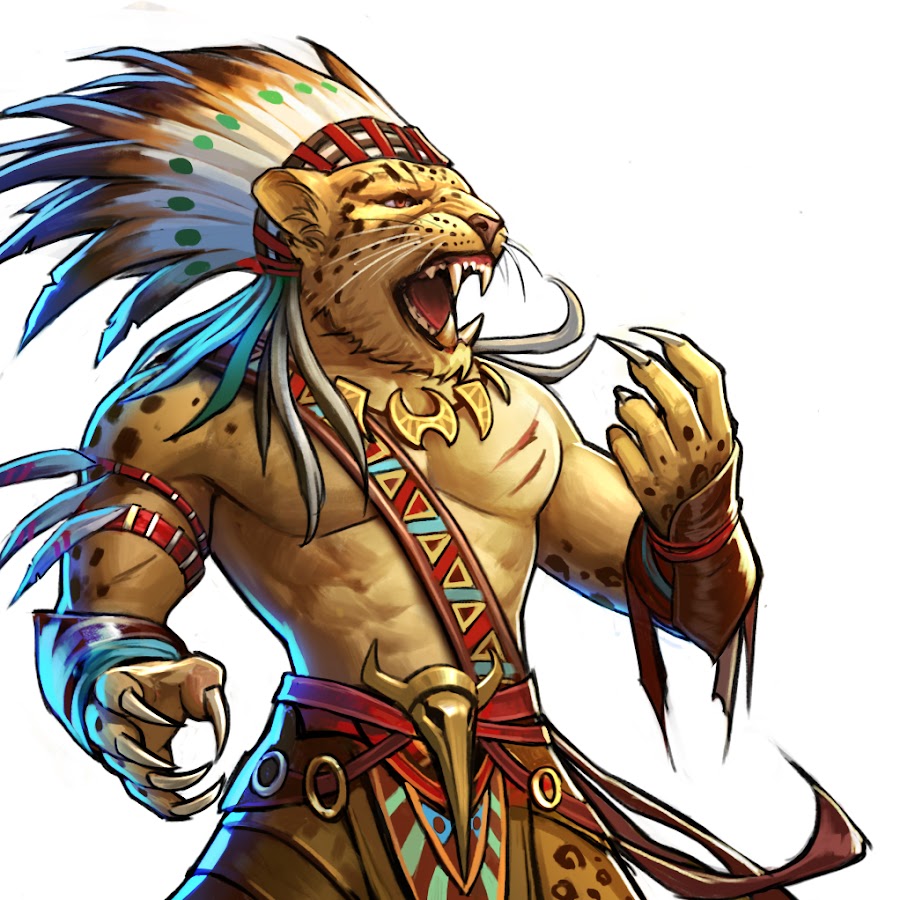
Kurimeo Ahau
pura vida, pura watah
1 day ago | [YT] | 26
View 0 replies
Kurimeo Ahau
Journey deep into the Maya jungle through rare archived documentary footage, as explorers trek through dense vegetation in search of ancient Maya cities, pyramids, temples, ruins and forgotten works of art.
What makes this old footage especially interesting are the discoveries inside the ruins—including surviving murals and wall paintings depicting the ancient Maya themselves. Some of these images preserve striking dark, swarthy complexions and features that can be seen directly in the artwork captured by the documentary cameras.
This is a journey back into an earlier era of Maya exploration, when many archaeological sites were still heavily engulfed by the jungle and the experience of reaching these ancient structures was very different from visiting the restored sites we know today.
Rare footage. Ancient cities. Hidden temples. Original Maya artwork.
Let’s explore the Maya jungle and see what the old cameras recorded.
Hope you enjoy.
1 day ago | [YT] | 41
View 0 replies
Kurimeo Ahau
TUNE IN LIVE !!
3 days ago | [YT] | 34
View 1 reply
Kurimeo Ahau
**BLACK EUROPEANS UNCOVERED — PART 8**
The historical descriptions continue.
In Part 8, we return directly to old historical books and accounts to examine how prominent European kings, queens, princes, philosophers and nobles were actually described — using the words of the historical writers themselves.
This episode examines **William the Silent (William of Orange)** through three separate sources describing him as having a **“brown complexion”** and **“swarthy complexion”** with chestnut hair.
We also examine descriptions of:
• **Mary I of England** — “Swarthy Complexion”
• **Catherine of Aragon** — “Bright Brunette Complexion” and “Swarthy, Sallow Complexion”
• **Anne Boleyn** — “Warm, Brunette Complexion” and black eyes
• **Charles II** — described by his own mother, Henrietta Maria, as **“so black”** as an infant
• **François, Duke of Anjou** — called a **“little blackamoor”**
• **Baruch Spinoza** — described with **“Skin somewhat black”** and “black curl’d Hair,” with the account connecting his appearance to his Portuguese Jewish ancestry
• **Charles I of Anjou** — described as **“dark-skinned almost as a Moor”** and elsewhere as a **“black man”**
Brown. Swarthy. Brunette. Sallow. Black. Blackamoor. Dark-skinned. Moor.
These are not descriptions I created. We are opening the historical sources and reading what THEY wrote.
This is **Part 8 of Black Europeans Uncovered** and another addition to a much larger archive of historical evidence presented throughout this channel.
As always, don't take my word for it.
**Read the sources. See the evidence. Come to your own conclusions.**
3 days ago | [YT] | 82
View 4 replies
Kurimeo Ahau
Long before Marvel introduced the world to Black Panther and the fictional African nation of Wakanda, the Americas already had an ancient history of BLACK PANTHERS, JAGUAR WARRIORS, sacred Panther/Jaguar traditions — and WAKANDA itself.
In this newly remastered version of my original 2018 presentation, we go back through the historical, scientific, archaeological and cultural sources and examine a story that deserves to be remembered in its proper American context.
First, what exactly is a “Black Panther”?
There is no separate species called the Black Panther. In the Americas, the Black Panther is the melanistic JAGUAR — Panthera onca. We examine the black Jaguar of the Americas, melanism, the genetics behind its black coat, and how it differs from the black leopards of Africa and Asia.
Then we go much deeper into the ancient American Jaguar tradition.
Throughout ancient America, the Jaguar was far more than an animal. It represented power, warfare, rulership, the night, spiritual vision, the underworld and the supernatural.
Ancient American civilizations had elite JAGUAR WARRIORS — human warriors who dressed in the skin and image of the Jaguar. We examine their training, their military role, Jaguar suits and masks, sacred Jaguar deities, Jaguar temples, kingship and coronation rituals, shamans, human-feline imagery and the mysterious “Were-Jaguar” transformation figures found throughout ancient American art.
Human beings taking on the identity and power of the Panther/Jaguar was already an ancient American tradition.
And then there is WAKANDA.
Wakanda / Wakonda was already an American Indian sacred word associated with the Supreme Being, Creator and Great Spirit. Variations of the name remain preserved across the American landscape in towns, lakes, parks and other locations.
We also explore HUACA / WAK'A and the ancient sacred traditions of Central and South America, adding another fascinating layer to the sacred terminology preserved throughout the Americas.
Now place all of this history side by side:
BLACK PANTHER • BLACK JAGUAR • JAGUAR WARRIORS • JAGUAR GODS • HUMAN-JAGUAR TRANSFORMATION • SACRED PANTHER POWER • KINGSHIP • CORONATION • NIGHT & UNDERWORLD • WAKANDA / WAKONDA • GREAT SPIRIT • HUACA / WAK'A
And there is still another piece to the story.
We examine the historical Black Panther political symbol in Alabama and its appearance BEFORE Marvel's Black Panther character debuted in 1966.
So where does the REAL history behind these names, symbols and traditions lead us?
This isn't simply a video about a Marvel superhero.
This is a journey into the BLACK PANTHER, the JAGUAR WARRIOR and WAKANDA in AMERICAN history.
The traditions were already here.
The words were already here.
The symbolism was already here.
It's time to give the ancient peoples of America their proper place in the story.
Watch the sources. Examine the images. Follow the history and come to your own conclusions.
THE REAL BLACK PANTHER & WAKANDA IN AMERICA
Remastered from my original 2018 presentation.
Get it like it's the first time…
4 days ago | [YT] | 50
View 5 replies
Kurimeo Ahau
What is the REAL origin of the name AMERICA?
We have all been taught that America was named after the European explorer Amerigo Vespucci—but does the historical record actually support that story?
In this presentation, we are going deep into the primary sources, early histories, maps, Indigenous traditions, names and records surrounding one of the most famous names on Earth.
We will examine AMARACA / AMARACAPANA in South America, AMARU, and AMERRIQUE / AMERRISQUE in Central America—names connected to the Americas independently of the traditional Vespucci explanation.
We will also take a closer look at Vespucci himself, including early forms of his name such as Alberico, and ask why the conventional explanation became accepted when there is another body of evidence sitting in the historical record.
This isn't a five-minute theory or a meme.
Follow the documents. Examine the chronology. Compare the names. Look at the Indigenous history and decide for yourself whether the word AMERICA really began with Vespucci—or whether Europeans encountered a name whose roots were already here.
AMARACA • AMARACAPANA • AMARU • AMERRIQUE • AMERICA
Get your notebooks ready. We're going back into the records.
1 week ago | [YT] | 47
View 0 replies
Kurimeo Ahau
In this quick historical throwback, we examine a fascinating advertisement from 1700s Amsterdam discussed in *A Sailor's Sketchbook of Human and Animal Curiosities in Early Modern Amsterdam*.
The advertisement invited “Gentlemen, Ladies, Burghers, Merchants” and other lovers of animals to an Amsterdam inn known as the White Elephant to see an extraordinary creature on display: a South American tapir.
But the most interesting part is where the advertisement claimed the animal had been captured.
According to the text, the tapir was captured “with great difficulty and cost in the River Euphrates in AMERICA.”
EUPHRATES — IN AMERICA.
Rather than simply imposing our modern geographical understanding onto the document, let's look at what people in Amsterdam were actually being told about the Americas during this period. Why was a river in America being identified as the Euphrates? What geographical ideas were circulating in Europe at the time?
And there is another fascinating detail: the river associated with the account is described as BLUE.
In the video, I show a modern real-life scene from Costa Rica — an American tapir standing in the striking blue waters of Río Celeste. It creates an almost perfect visual representation of the unusual description preserved in this old European account.
I'm not asking you to accept a conclusion beforehand.
I'm showing you the historical evidence.
Read it. Look at it. Think about it.
Get it like it's the first time.
SURF THE WAVE.
1 week ago | [YT] | 19
View 2 replies
Kurimeo Ahau
Today we travel to Punín, Ecuador, to examine one of the most fascinating and controversial human skulls ever discovered in the Americas.
In 1923, an expedition from the American Museum of Natural History recovered a human cranium from the Quebrada Chalán in a geological setting containing extinct Pleistocene fauna, including ancient horses, mastodons, ground sloths and camel-like mammals. The original investigators noted that the skull was not positioned like a normal burial and concluded that “serious consideration” had to be given to its implied contemporaneity with the Pleistocene animals of the Punín beds.
But the controversy did not end with its possible antiquity.
When anthropologists Louis R. Sullivan and Milo Hellman examined the Punín skull, they concluded that its morphology was strikingly “Australoid” in appearance. Their measurements led them to compare it particularly with skulls from Tasmania, Australia and New Guinea. Other prominent anthropologists—including Sir Arthur Keith and Earnest Hooton—also recognized Australasian similarities in the specimen. Historical discussions continued to describe Punín as important evidence in the debate over Australoid and Melanesian morphological elements in ancient America.
And that is where this story becomes much bigger than one skull.
For years on this channel we have examined evidence for the diversity and antiquity of the peoples of ancient America, including discoveries that challenge the old simplified Clovis-first picture. The Punín skull adds another fascinating piece to that discussion.
Whatever populations this ancient woman ultimately belonged to, she was found in Ecuador—she is part of the story of ancient America. The question is: how much of that story have we actually been taught?
In this episode we go directly into the historical anthropological literature and the original excavation reports so you can examine the evidence for yourself.
The Punín Skull. Pleistocene context. “Australoid” morphology. Ancient Ecuador.
1 week ago | [YT] | 17
View 0 replies
Kurimeo Ahau
In the back of the classroom at @432thedropradio university ..... What it means to surf the wave .. HAWAH !
1 week ago | [YT] | 33
View 0 replies
Load more