
 Fencer Fixer Repair LLC.
We at Fencer Fixer Repair LLC are in the business for testing & repairing ALL BRANDS of electric fence energizers, electric fence chargers, and electric fencers from the really old ones to the new ones being built today. We also test and repair livestock weigh scales, livestock load bars, and livestock EID tag readers of both the handheld type and the stationary tag reader type. We provide FREE ESTIMATES & and a year and half repair warranty that covers lightning & power surge damage.
Speedrite, Stafix, Gallagher, Parmak, Patriot, Cyclops, Zareba, Fi-Shock, Tru-Test, Red Snap'r, Sears, Hol-Dem, American Farmworks, and many many others as well.
Fencer Fixer Repair LLC.
youtube.com/shorts/9fGV1s0-jF...
Here's the wire that's going to be used when making the custom output transformer windings. The larger gauge wire is for the primary side and the smaller gauge wire is for the secondary side. This transformer with the size is the wire and how the internals will be built and sealed, it'll be able to go up to 20 joules with this design. If there's a need for more joules, two of these can be used, but must be wired in parallel to share the energy load. Top tier build quality.
3 days ago | [YT] | 1
View 0 replies
Fencer Fixer Repair LLC.
youtube.com/shorts/1yhzJo0yJa...
The winding of the custom output transformer.
1 week ago | [YT] | 1
View 0 replies
Fencer Fixer Repair LLC.
youtube.com/shorts/EyVetUa5zr...
Custom transformers being made
1 week ago | [YT] | 10
View 2 replies
Fencer Fixer Repair LLC.
I also asked if they could test the amp draw and power consumption of the circuit from the 120vac side and here's what they had to say at far as cost to operate it.
Power Consumption of the 120-Volt Energizer
A lot of people ask how much power a fence energizer uses and what it costs to run one. Here’s the breakdown for your 8–10 stored joule model:
Average power draw: about 8–12 watts
Typical current draw: around 0.07–0.12 amps from a standard 120 V outlet.
Pulse rate: about once every 1.3 seconds
Energy per pulse: roughly 8–10 joules
For comparison, this uses less power than a small night-light.
What does it cost to run?
If you run the energizer 24 hours a day, 365 days a year, the average annual energy use is roughly:
70–110 kWh per year, depending on fence load and conditions
Using an average U.S. electricity rate (about 12–15 cents per kWh), the yearly cost comes out to:
> Around $8–$15 per year to operate
(that’s roughly 60 cents to $1.25 per month)
Bottom line...This energizer is very efficient and inexpensive to run. Even though it delivers strong pulses for reliable fence performance, the actual power draw on a 120-volt outlet is extremely low. You can leave it plugged in full-time without worrying about your electric bill.
4 weeks ago | [YT] | 17
View 0 replies
Fencer Fixer Repair LLC.
I submitted the schematic and parts list to engineering company that is going to look at producing the circuit board that I'll retrofit into some units and eventually into our own in house brand. Here's what they had to say about the design.
Estimated Lifespan of the Energizer (Engineer’s Assessment)
After reviewing the schematic, layout, and the specific components selected for this energizer design, I can give a realistic estimate of how long the unit should last under normal operating conditions.
This design uses high-quality, oversized components throughout the entire circuit. These parts are intentionally rated far above what the energizer will ever demand from them. That extra overhead means the components are never being pushed hard, which dramatically increases long-term reliability.
Because of this design approach:
Typical lifespan:
15–20 years
Best-case lifespan:
20–25+ years, especially when kept in a clean, dry location with good lightning protection
Why it will so long...
The main pulse capacitor is a premium film capacitor that operates well below its voltage and current limits.
The multiplier capacitors and diodes are name-brand, high-voltage film and fast-recovery components designed for decades of service.
The SCR is heavily oversized for this joule rating, so it experiences very little stress.
The output transformer (especially if using a Pakton design) is built for long-term field use.
The pulse rate is slow (roughly once every 1.3 seconds), which keeps component heating extremely low.
Why the construction style matters...
This board is 100% through-hole, which is almost unheard of in modern consumer electronics. Most electronics today use tiny surface-mount parts that are harder to cool, harder to repair, and often not designed for long-term survivability.
Using through-hole components gives several major advantages:
They tolerate heat and high-energy pulses better
They handle vibration and mechanical stress far better
They allow actual long-term serviceability and repairs, as individual parts can be replaced without specialized equipment
Even after 10 or 15 years, nearly every component on the board can still be replaced if it’s not lightning-damaged
This is an old-school approach to building an energizer, but it’s the right approach for durability. It costs more to produce, but the payoff is a board that is strong, reliable, and repairable decades later.
Bottom line evaluation...
Because the components are oversized, conservatively used, and mounted using robust through-hole construction, a properly installed energizer built from this design should easily last many years — often multiple decades — before any major component shows wear, as long as it isn’t damaged by lightning or severe surges.
4 weeks ago | [YT] | 19
View 5 replies
Fencer Fixer Repair LLC.
If I was to offer an American made 110/120vac electric fence charger with old school electronics using overbuilt name brand parts, with 8-10 stored joules and 5-6 output joules at 8-10kv peak voltage, serviceable and durable, what price range would you think would people be willing to pay?
1 month ago | [YT] | 15
View 28 replies
Fencer Fixer Repair LLC.
youtube.com/shorts/k3MDSrxBK3...
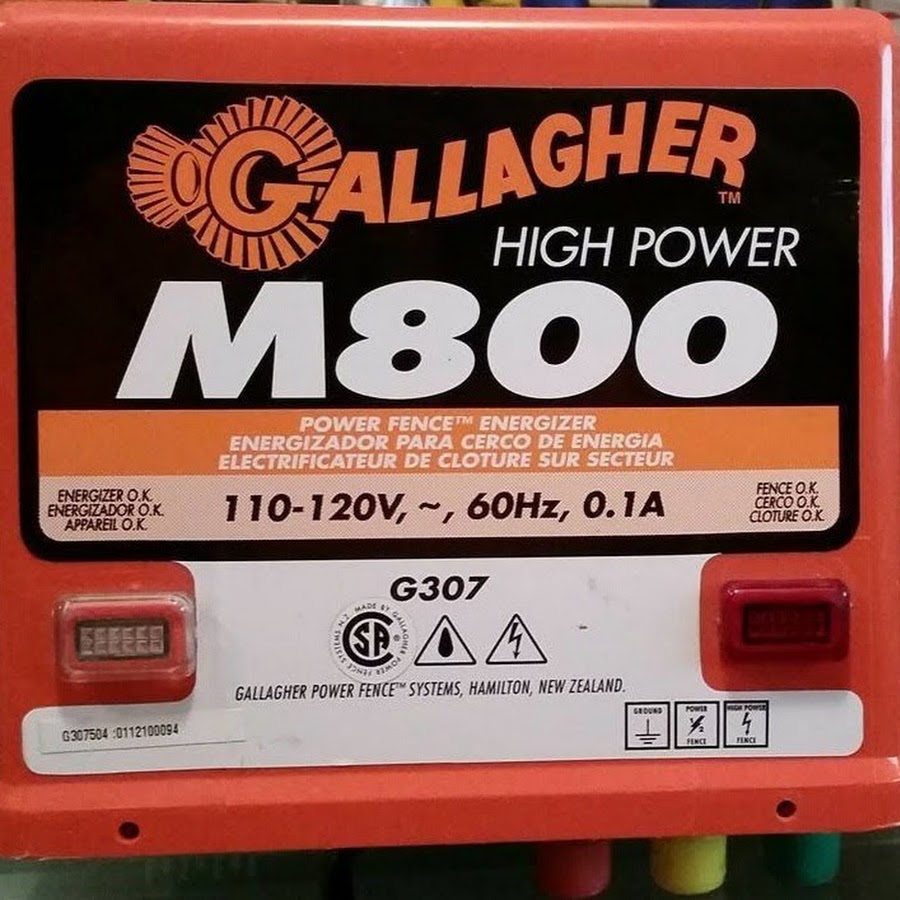
Isn't it crazy and dumb, that a Maytag/Whirlpool dryer at Costco, on sale for $400, cost less than a mid size Gallagher M800 fence charger $439
powerflexfence.com/products/gallagher-m800-energiz…
2 months ago | [YT] | 0
View 0 replies
Fencer Fixer Repair LLC.
Datamars, who bought out Tru-Test about 6-7 years ago when they were struggling financially, are making more and more customers upset these days it seems. They discontinued the Stafix brand about 5 years ago, which is no big deal because they're the same thing as Speedrite. But what they've gone and done, is they discontinued the models Stafix M36R/Speedrite 36000 and Stafix M36R/Speedrite 63000 about 3-5 years ago when they came out with their new budget models. Which is fine, but what's happening now when it comes to servicing a bad 3-5 year old unit is the issue.
The bad thing now is you can't get the parts for either one of them anymore. They're now saying that any non production model, when it's only been 3-5 years since they stopped making a model, they're not able to support them with service parts. The main hub here in the United States down in Texas, isn't even taking in any non production models anymore, but if they do show up, they're not fixing them and offering a buyback and offering a small (10-15%) discount off a new model. With the price of their newer ones being $2000+, it's still a hefty price tag even with the discount after you tack on any taxes etc.
We've gotten in for repair about 7 of the older Stafix M20R and M36R models for repair, and unfortunately they're cooked on the boards and there aren't any replacements available that I can find. So now what I'm working on is another electronic schematic for a PCB to be made to retrofit into these units. Once you remove the board inside, there's a lot of working room to install a different board. So I've got a 28-35 stored joule, 20+/- output joules and a 45-50 stored joule to 36+/- output joule board. I'll be able to reuse the factory transformer, I'll just have to cut and splice by soldering and heat shrinking some wires onto the transformer primary to make them longer so I can plug onto my board. That's in the early stages though of the schematic drawing, but it is doable. All old school electronics, overbuilt and serviceable.
Though, the only downside for the customer, they can't use the remote anymore to talk to the unit to turn it on and off from the fence, but they can still use it as a fault finder. I'll guess they'll have to invest in some good quality cut out switches to turn a section of fence off.
2 months ago | [YT] | 10
View 2 replies
Fencer Fixer Repair LLC.
Well, I'm one step closer into this venture of having PCBs made to retrofit into non-repairable units, and eventually have my own in-house brand of fence chargers. I believe these will be superior units, using name brand overbuilt parts, old school through hole components, durable and serviceable. I got a call from a place that's about 50 miles from us, which I'm happy about because I can save on shipping and I can go there in person if need be to talk about things. They wanted the hand drawn schematic, which I have cleaned up and tweaked, and a bill of materials (BOM) with part numbers, designators, manufacturers, and some other notes. Below is the message I sent them. I sent them multiple pictures of the schematic.
Project overview:
This is a 110/120 VAC–powered electric fence energizer design, agriculture/livestock related. The circuit uses a 4-stage Cockcroft-Walton multiplier to charge a 30 µF / 1100 V polypropylene capacitor, which is then discharged through an SCR into the primary of a step-up transformer. The target output is approximately 9–10 kV open circuit, with 5–6 joules delivered per pulse at around 1.2–1.3 second intervals. The timing intervals and output kv will be taken care of by the trimmer in the circuit and the output transformer I have here to plug onto this board for testing.
What I am looking for:
Conversion of the attached schematic into a professional PCB design and layout
Through-hole component footprints, solder on only one side of the board. Name brand parts.
Silkscreen on each part with designator
One edge of the board, I'd like silkscreened, Designed By: Fencer Fixer - Made in the USA
Proper creepage/clearance for 750–1000 V nodes (≥5 mm, ideally 8–10 mm where space allows)
Initial prototype build of 2–3 boards for testing here
Board constraints:
Approximate target size: 4″ × 9″, but if they can be made a little smaller safely with creepage/clearance in mind, I'm open to that as well.
High-voltage design, so component spacing and insulation practices are critical
2 oz copper recommended for durability
For the mounting holes on the PCB, please add one in each corner. I’d like to use either #6 (3.5 mm) or M3 (3.2 mm) screws, so the hole size should be in that range. The holes should be non-plated (mechanical only, no copper inside the hole) to avoid any high-voltage tracking issues.
Please include a keep-out/clearance area around each hole—about 6 mm diameter with no copper or traces nearby. This will allow me to use either plastic standoffs or case mounting screws safely.
Future scope:
If prototypes perform as expected, I may also need assistance with small-run assembly and eventual box builds (housing, transformer, wiring integration).
Please let me know what file formats or additional details you would need from me to move forward. I'd be happy to come down in person at some point to visit and take a tour of the place to see how my board would be built.
PS: I have about 4-6 other designs written down, but not in a schematic drawing yet. Some of the designs are very similar to one in this schematic, with minor changes and some are a bit different, but they're all related to electric fence energizers and accessories. I'm a repair shop here in Excelsior Springs MO, but I do repairs and sales for customers nationwide and also have a YouTube channel as well. I've been working on electric fence energizers for 20 years and have been in the technician/repair side of things on electronics for around 25 years. Farmers, both big and small, want serviceability and reliability, and are getting tired of either overpriced junk or cheap junk.
2 months ago (edited) | [YT] | 27
View 8 replies
Fencer Fixer Repair LLC.
Well, I ordered all the components to start and build the board for the 120vac 5+/- joule board. I probably won't make a video of me putting the board together, because I need to focus on what I'm doing by double-checking the schematic vs putting the components in the right spot and tying them together. I'll make a video after the board is built, showing everything done. Depending on how the build goes, I may wait and show it pulsing during that same video or do it before just to see first on my own, then show it in the video.
I'm also in the beginning stages of drawing up a schematic for 6v powered board with solar panel connections. I'm aiming for it to be in the 0.15-0.2 output joule range. It'll be set up as a replacement board for the zareba/Blitzer/Red Snap'r 10 mile solar units that don't hate anymore parts for them being offered, which is shameful of the manufacturer, Woodstream, who also makes the American Farmworks junk at TSC.
3 months ago | [YT] | 16
View 7 replies
Load more